
What Is the Best Plastic Wheel for Industrial Use in 2026?

Choosing the best Plastic Wheel for industrial use in 2026 means matching the wheel to the job, not simply picking a popular material. A wheel that rolls quietly across smooth epoxy may perform poorly on cracked concrete or over metal floor joints. Small details matter. Load per wheel, travel speed, turning frequency, and floor condition all affect service life. This guide introduces the key choices and the practical checks that can narrow them down.

Polyurethane wheels are often considered for their balance of wear resistance and floor protection, while nylon may suit some higher-load applications on smooth surfaces. Rubber can provide quieter movement and better grip, but its capacity and wear behavior depend on the design. No material wins in every setting. Temperature, moisture, oils, cleaning agents, and debris can change how a wheel performs. Even a short route through a wet loading area can expose weaknesses that a showroom test misses.

The sections ahead explain how to compare load ratings, tread hardness, wheel diameter, bearings, and mounting options. They also consider noise, rolling resistance, maintenance, and total operating cost. One detail deserves a second look: published capacity ratings may not reflect frequent impacts, uneven load distribution, or continuous use. Check the manufacturer’s specifications, and ask how test conditions relate to your site. A small pilot trial can help. It is not perfect, but observing a wheel on the actual floor often reveals issues that a product sheet cannot.
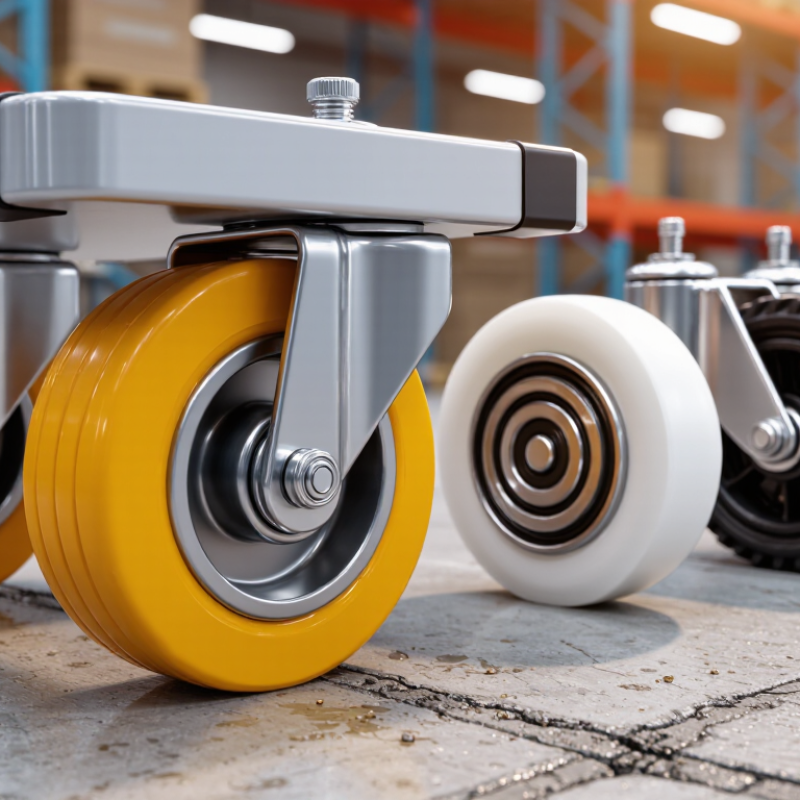
What Is the Best Plastic Wheel for Industrial Use in 2026?

What Defines a Plastic Wheel for Industrial Use?

An industrial plastic wheel is not defined by plastic alone. It is a load-bearing part matched to a cart, machine, floor, and working environment. The resin matters: nylon can suit firm floors and heavier loads, while polyurethane may provide quieter rolling and more grip. Neither material is best in every setting. Looks can mislead.

A wheel’s rated capacity should account for load distribution, speed, and repeated impacts, not just total cart weight. On an uneven floor or during a sharp turn, one wheel may carry more than its share. Bearing type and wheel diameter also affect rolling effort, obstacle clearance, and wear. Check temperature, moisture, oils, and cleaning chemicals against the wheel’s technical specifications. Test under load.

The floor matters, too. A hard tread may roll efficiently on smooth concrete but transmit more vibration over rough joints. A softer tread can improve grip, yet may wear faster under heavy use. Consider aisle noise, turning space, and how often the cart stops and starts. Inspect for cracks, flat spots, and loose bearings. Specifications help, but actual site conditions sometimes expose what a datasheet misses.

Which Plastic Materials Suit Different Industrial Conditions?

Choosing an industrial plastic wheel starts with the floor, load, and operating environment. Polyurethane suits frequent travel over finished concrete: it absorbs vibration, runs quietly, and resists abrasion. Nylon handles heavy loads and rolls efficiently, but its hard tread can be noisy on uneven floors. It may also absorb moisture, which can affect fit and performance. There is no perfect resin; published specifications do not capture every real-world floor.

For wet or chemically exposed areas, polypropylene resists many corrosive substances and keeps wheel weight low, though it is generally less suited to high loads or heat. UHMW polyethylene offers strong wear and impact resistance, but prolonged heavy loading can cause creep. PlasticsEurope’s 2024 report estimates global plastics production at 413.8 million tonnes in 2023. That scale makes material selection and end-of-life planning worth considering, not just purchase price. Verify temperature limits and chemical compatibility against the supplier’s test data.

Tips: Test a sample under the actual load. Check noise, rolling effort, and tread wear after repeated trips. A small trial can expose a mismatch quickly.

How Do Load Capacity, Wheel Size, and Bearings Affect Performance?

What Is the Best Plastic Wheel for Industrial Use in 2026?

Load capacity, wheel diameter, and bearings work together; a strong wheel can still roll poorly if one is mismatched. Estimate the loaded cart’s total weight, then divide by three—not four—when it has four wheels. Uneven floors can leave one wheel unloaded. Add allowance for impact, thresholds, and frequent starts, rather than treating the rated capacity as a target. Small details matter. A heavy cart crossing a floor joint can impose a sharper shock than its static weight suggests.

Diameter affects obstacle handling. A larger wheel typically rolls over floor cracks and door thresholds with less effort, but needs more clearance and may raise the platform. Tread material and floor condition also change rolling resistance. Bearings matter under sustained use: ISO 281:2007 calculates basic rating life at 90% reliability under specified conditions. For ball bearings, its life equation uses the cube of the ratio between dynamic load rating and applied load; doubling bearing load reduces calculated life to one-eighth. That is a model, not a service-life guarantee. Dust, moisture, poor alignment, and lubrication can shorten real-world life. Check both the wheel’s load rating and bearing specification, then test the assembled cart on the actual route. Not always easy.

How Should Floor Type, Temperature, and Chemicals Guide Selection?

What Is the Best Plastic Wheel for Industrial Use in 2026?
How Should Floor Type, Temperature, and Chemicals Guide Selection?

The best plastic wheel depends on the route it travels, not just its load rating. On smooth concrete, a harder nylon or polypropylene wheel rolls easily. But on tile joints or rough floors, a softer polyurethane tread can reduce vibration and noise. Check floor condition, too: grit trapped under a hard wheel may scratch a sealed surface. The U.S. Bureau of Labor Statistics reported 2.6 million nonfatal workplace injury and illness cases in private industry in 2023. That figure does not prove wheels caused injuries, but it underlines why stable, predictable movement matters.

Temperature and chemical exposure can change a wheel’s performance. Heat may soften some plastics; cold can make others brittle. Compare the actual operating range with the grade’s technical data, including brief washdowns and hot-load exposure. For chemicals, ASTM D543-20 outlines ways to assess plastics’ resistance to reagents, including changes in mass, dimensions, and appearance. A compatibility chart is a starting point, not a guarantee: concentration, contact time, and temperature matter. I would test a sample under real conditions before specifying a large fleet.

Tips: Match tread hardness to the floor, then verify load and temperature ratings. Note every cleaner and spill the wheel may encounter. Ask for test data. Recheck after a trial run; a tidy specification can still miss one awkward threshold or floor seam.

What Is the Best Plastic Wheel for Industrial Use in 2026? — How Should Floor Type, Temperature, and Chemicals Guide Selection?

Wheel Tread Material Floor Type and Typical Use Indicative Continuous Temperature Range General Chemical Resistance Key Advantages Selection Cautions
Polyurethane Smooth concrete, sealed floors, and other hard floors; useful where floor protection, quiet rolling, and abrasion resistance matter. Approximately −30°C to 80°C (−22°F to 176°F), depending on formulation. Generally resists oils, greases, and many common cleaning agents. Resistance to strong acids, strong alkalis, hot water, and particular solvents varies. Low rolling resistance, good wear life, and less floor marking than many hard-wheel materials. May flatten or wear faster under prolonged heat or heavy static loads. Confirm compatibility with the exact chemical and cleaning concentration.
Nylon (Polyamide) Hard, smooth concrete and industrial floors; best where low rolling resistance and high load capacity are more important than a soft ride. Approximately −40°C to 120°C (−40°F to 248°F), depending on grade and wheel design. Often resists oils, fuels, and many alkalis. Strong acids can attack nylon; moisture absorption can affect its dimensions and performance. Hard, durable, and easy to clean; typically rolls efficiently on smooth floors. Can be noisy and may damage or mark delicate floors. Its hard tread transmits impacts and vibration, especially on cracked or uneven surfaces.
Polypropylene Smooth floors and light-to-medium-duty applications, especially where corrosion resistance and frequent washdown are priorities. Approximately −20°C to 80°C (−4°F to 176°F), depending on formulation. Generally resists many acids, alkalis, salts, and water. Resistance to solvents and oxidizing chemicals is substance- and concentration-dependent. Lightweight, moisture-resistant, and suitable for many corrosive or wet environments. Usually less suitable than nylon for heavy loads or repeated impact. Check load capacity and chemical compatibility for the specific duty cycle.
Rubber Rough, uneven, or tiled floors; useful where grip, quiet movement, and vibration reduction are important. Approximately −20°C to 70°C (−4°F to 158°F), depending on rubber compound. Resistance varies widely by rubber type. Some compounds tolerate water and mild cleaners, while oils, fuels, solvents, or strong chemicals may cause swelling or deterioration. Good traction and shock absorption; generally quieter and gentler on floors than hard treads. May have higher rolling resistance and can leave marks. Verify compound compatibility where oils, chemicals, or high temperatures are present.
Phenolic Resin Smooth, hard industrial floors and applications requiring a rigid wheel with heat resistance and high load capacity. Approximately −40°C to 120°C (−40°F to 248°F), depending on construction and exposure conditions. Often resists oils, greases, and some chemicals. Compatibility with water, steam, strong acids, and strong alkalis depends on the resin and exposure. Rigid, wear-resistant, and suitable for some higher-temperature or heavy-duty applications. Can be noisy and brittle under impact; chips or cracks are more likely on uneven floors or when loads are dropped onto the wheel.

Selection note: Temperature ranges are indicative material-level guidelines, not guarantees for every wheel. Actual limits depend on the tread formulation, wheel construction, bearings, load, speed, and exposure duration. Before purchase, verify the rated load and temperature limits and check chemical compatibility against the exact chemical, concentration, and contact conditions.

Which Plastic Wheel Design Fits Each Industrial Application?

A wheel that works well on polished concrete may struggle on a wet washdown floor. Match the design to the surface, load, speed, and cleaning routine. Hard nylon wheels carry heavy loads efficiently and resist many oils, but they can be noisy and may mark or damage softer flooring. They suit smooth, clean floors better than cracked concrete.

For quieter movement, consider a polyurethane-tread wheel with a rigid plastic core. Its softer tread improves grip and reduces impact noise on warehouse floors. It can also protect finished surfaces. Heat, sharp debris, and prolonged chemical exposure may shorten its service life, so check the material’s limits against actual operating conditions. Small details matter.

Polypropylene wheels are lightweight and resist moisture and many corrosive substances, making them useful for light-duty carts in damp areas. They are less suitable for heavy loads or rough floors, where deflection and vibration can become problems. The caster design matters too: swivel wheels help tight turns, while fixed wheels track straight along production lines. Choose bearings and wheel diameter for the load and travel distance. A larger diameter usually crosses floor joints more easily. Still, specification charts can mislead when real floors are uneven; test a loaded cart on the route before standardizing a wheel.

What Is the Best Plastic Wheel for Industrial Use in 2026?

Which plastic wheel design fits each industrial application? Compare indicative operating-temperature ranges by wheel material.

Temperature ranges are typical material-level guidelines, not guaranteed wheel ratings; actual limits vary with formulation, wheel construction, load, speed, and exposure. Nylon is often selected for heavy loads, polyurethane for quieter rolling and floor protection, polypropylene for wet or corrosive settings, and phenolic for hot, dry environments. Check the wheel’s rated specifications for your application.

Article Source: