How to Choose the Best T Slot Extrusion for Your Project?
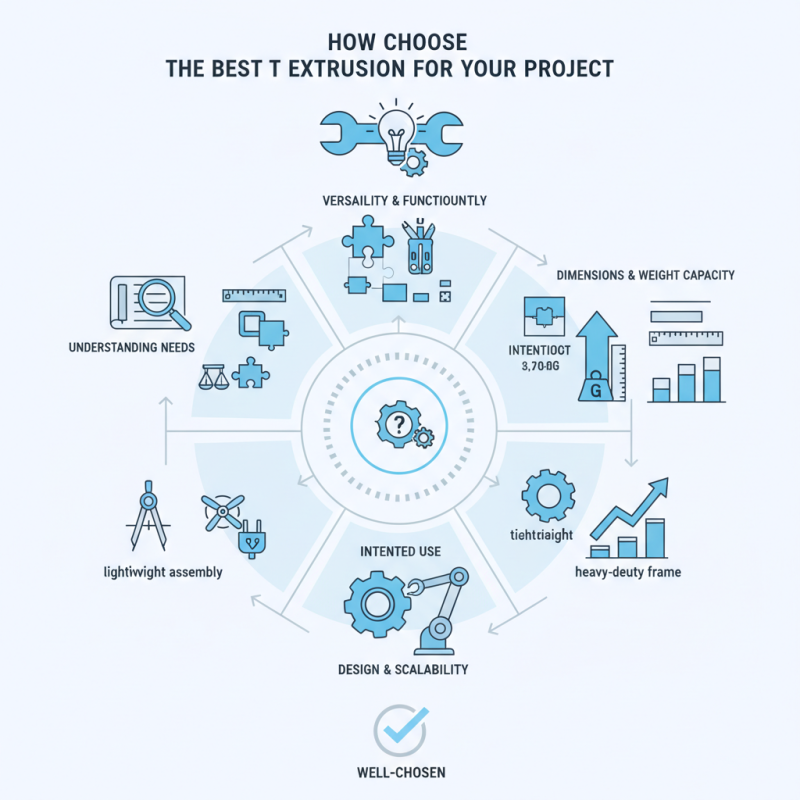
Choosing the right T Slot Extrusion can be challenging. It’s a crucial decision that impacts the success of your project. Understanding your specific needs is essential. Each project is unique, requiring careful consideration of various factors.
T Slot Extrusion systems offer versatility and functionality. They come in different profiles, materials, and sizes. You need to evaluate the dimensions and weight capacity required for your application. Moreover, the intended use affects your choice. For instance, a lightweight assembly may require different specifications than a heavy-duty frame.
Additionally, don’t overlook the importance of compatibility. Ensure that your selected T Slot Extrusion works well with other components. This can save time and resources in the long run. Reflect on design requirements and future scalability too. This careful planning will lead to a more effective outcome. Remember, a well-chosen T Slot Extrusion is not just about immediate needs but future possibilities.
Understanding T Slot Extrusions and Their Applications
T-slot extrusions play a crucial role in various applications, from building frames for machinery to creating custom workstations. Understanding their versatility is essential for selecting the right type for your project. These extrusions consist of a series of slots, allowing for easy assembly and modification. They are made from aluminum, which contributes to strength and lightweight characteristics. This makes them ideal for prototyping as well as permanent structures.
Different projects require specific configurations. For instance, a larger T-slot may be needed for heavy machinery, while smaller profiles work well for delicate equipment. It's also important to consider the thickness of the extrusion. Thicker profiles provide more stability but may be overkill for lighter applications. Some designs might feel too rigid, which could limit flexibility during use. Always reflect on your project's unique demands before making a choice.
In industrial settings, T-slot extrusions are praised for their adaptability. However, they can sometimes lead to design constraints. While the slots enable easy attachment, excess components can clutter the workspace. Simplicity can enhance functionality, so it's worthwhile to evaluate the extrusions based on how they align with your goals. Having a clear vision and acknowledging potential drawbacks will guide you toward the most effective solution.
Comparison of T Slot Extrusion Strengths
Key Factors to Consider When Selecting T Slot Extrusions
When selecting T slot extrusions for your project, several key factors should be considered. The application you have in mind will significantly influence your choice. Think about the weight-bearing requirements and the complexity of the design. Ensure that the extrusion can accommodate the necessary loads without compromising stability.
Materials also play a vital role. Common choices include aluminum and steel. Aluminum extrusions are lightweight and resistant to corrosion, while steel offers added strength. Evaluate the environment where your project will be used. In some cases, a combination may provide the best balance between durability and weight.
Tips: Always consider the compatibility of connectors and accessories. Mismatched components can lead to assembly issues. Measure your available space accurately. An extrusion that is too large can complicate the design process. Finally, make sure to inspect any edges or surfaces for burrs or imperfections. Small flaws can affect both aesthetics and functionality. Prioritize quality, as an imperfect choice can lead to costly modifications later on.
Evaluating Material Types for T Slot Extrusions
When evaluating material types for T-slot extrusions, consider the specific requirements of your project. Aluminum is a popular choice due to its lightweight and high strength. It offers excellent corrosion resistance and allows for easy machining. However, its thermal and electrical conductivity may not be suitable for all applications. If you're working in a more demanding environment, stainless steel might be ideal. It provides superior strength and durability but can be heavier and more challenging to work with.
Tips: Always assess the load requirements before selecting the material. Sometimes, a lighter option suffices. Also, consider the environmental conditions where the extrusion will be used. Will it be exposed to moisture or harsh chemicals? These factors can significantly affect the material choice.
Another option is to explore plastic extrusions. They are lighter and resist corrosion well. However, they may not provide the same strength as metals. While they work great for low-stress projects, they could warp under high heat or heavy load. Reflect on the project's longevity requirements. Will the components face constant wear? This consideration can guide you towards the best option for your needs.
How to Choose the Best T Slot Extrusion for Your Project? - Evaluating Material Types for T Slot Extrusions
| Material Type | Strength | Weight | Corrosion Resistance | Cost (per kg) |
| Aluminum | High | Lightweight | Good | $3.00 |
| Steel | Very High | Heavy | Moderate | $1.50 |
| Plastic | Low | Very Lightweight | Limited | $2.00 |
| Stainless Steel | High | Heavy | Excellent | $3.50 |
| Magnesium | High | Very Lightweight | Good | $4.00 |
Recognizing the Importance of Size and Dimensions
When selecting the right T slot extrusion, size and dimensions play a crucial role. A well-chosen extrusion ensures stability and functionality in your design. According to a report from the International Aluminum Association, precise dimensions can enhance load-bearing capacity by up to 30%. This is significant for applications ranging from machine frames to conveyor systems.
It's essential to measure your project's specifications meticulously. Consider factors like width, height, and profile type. A mismatch in any dimension can lead to structural issues. Research indicates that 40% of design failures stem from incorrect sizing. Using CAD software can help visualize and adjust these dimensions effectively before physical production.
Don't overlook the impact of the extrusion's weight. Heavier extrusions may provide more stability but can also increase installation complexity. Aim for a balance that suits your project needs. While opting for larger profiles may seem advantageous, it's vital to reflect on the practical limitations, such as transport regulations and assembly space. These details can shape your project's success.
Comparing Cost and Quality of Different T Slot Extrusions
When selecting T slot extrusions for a project, analyzing cost and quality is essential. Recent industry reports highlight that sourcing high-quality extrusions can lead to savings in long-term maintenance. For instance, low-cost materials may reduce initial expenditure, but they often require replacements sooner than premium options. Investing in durable, high-quality extrusions can minimize overall costs in the lifespan of a project.
Comparative studies reveal that T slot extrusions made from specific aluminum alloys provide better strength and rigidity. Alloys such as 6063-T5 show improved performance under structural loads. A project may require different sizes and finishes depending on specific applications. Investing in reliable suppliers can ensure that the materials meet technical standards for your use.
Tip: Prioritize suppliers with verifiable certifications. Quality assurance processes ensure products meet stringent industry norms.
Another factor to consider is the complexity of assembly. A lower cost may result from simpler designs that are easier to assemble but may limit future modifications. Careful planning can pay off in usability and adaptability.
Tip: Always request samples before confirming orders. Test them in your working conditions to evaluate how they hold up. This practice helps to identify potential issues before they escalate into costly problems.
