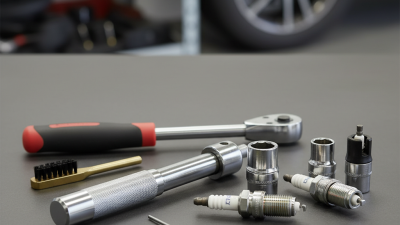
A spark plug may be small, but reaching it can involve a cramped engine bay, a deep socket, and a delicate ceramic insulator. The right spark plug tools help make that job controlled rather than hurried. They also help reduce the risk of damaged threads, cracked plugs, or a socket that will not release its grip. Small details matter.
S&P Global Mobility reported that the average age of U.S. light vehicles reached 12.6 years in 2024. Older vehicles can mean more routine maintenance, though age alone does not prove a spark plug needs replacement. For tool selection, the practical questions are specific: Does the socket fit the plug hex? Is its wall thin enough for the access well? Can an extension reach without binding? A swivel may help, but it can also make alignment less precise.
This guide compares seven points, including socket fit, retention style, extension length, torque control, material, and storage. It aims to make each choice easier to check at the bench. There is one limitation: no verifiable named spark-plug-tools expert quotation was provided, so this introduction does not invent one. That omission is deliberate. A credible recommendation should be traceable to a source, not merely sound authoritative.
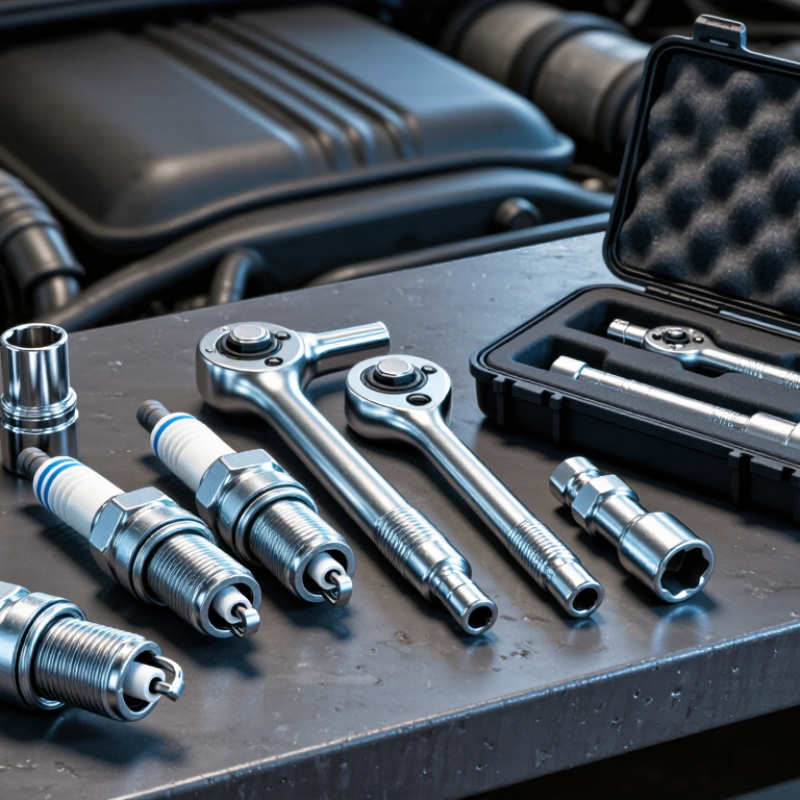
Start with the vehicle’s year, model, engine, and engine code. Check the owner’s manual or service information for the specified plug socket size, access method, and tightening torque. A 14 mm or 16 mm socket may fit some engines, while others require a different size. Guessing from appearance can waste time—or damage a plug.
Check the space around each plug well before choosing extensions. A deep, thin-wall socket may be needed where the well is narrow; a universal joint can help around an obstruction. Note whether the socket holds the plug securely, too. Rubber inserts and magnetic retention both have limits, so test the fit gently before lowering a plug into a deep well.
Vehicle age alone is a poor guide. S&P Global Mobility reported that the average age of U.S. light vehicles reached 12.6 years in 2024, meaning owners may encounter many engine designs and service layouts. Confirm the details for your specific engine rather than relying on a general tool kit. A torque wrench is useful when the service procedure specifies a torque value. Use a gap gauge only if the plug maker or vehicle instructions call for checking or adjusting the gap; some plugs should not be adjusted. Double-check the procedure. Small details matter.
Choosing spark plug tools starts with the engine’s service information, not the socket drawer. Check the required plug thread diameter, reach, seat style, and hex size. A socket that fits the hex can still be wrong for the plug’s length or the space around it. Confirm the engine code too; similar engines may use different specifications. Small details matter.
Tip: Compare the tool with the exact plug specification before buying. Measure the socket’s depth and outside diameter if access is tight. A thin-wall socket may clear a narrow plug well, while a standard socket may not. Check whether the tool’s insert holds the plug securely without gripping it so tightly that removal becomes awkward. Test the fit by hand first. No forcing.
Tip: Match extensions and the torque wrench to the engine layout. A long extension can help reach a recessed plug, but a swivel joint may make alignment harder to judge. Keep the socket straight as you loosen or install the plug. I’d double-check the manual’s torque value rather than rely on feel alone; that habit is easy to skip when a repair seems simple. Also inspect for cracks or worn edges before use. A damaged tool can slip and round the plug hex.
Choose spark plug tools by matching material to the work, not by weight alone. Chrome-vanadium steel is common and corrosion-resistant when its finish stays intact; tougher alloys may better tolerate repeated shop use. Inspect the socket’s thin wall, rounded edges, and rubber or magnetic insert. A cracked insert can let a plug slip, even when the outer steel looks fine. Feel matters. The handle should stay secure with oily fingers, yet not force a painful squeeze. NIOSH identifies forceful exertion and awkward postures as workplace ergonomic risk factors, so a slippery grip is more than a minor annoyance.
Reach matters most when plugs sit deep under hoses or beside brackets. Compare socket depth and extension length against the engine bay, then check whether a swivel joint moves smoothly without excessive wobble. Too much length can make alignment harder. A short extension may leave your knuckles against a hot-looking edge; pause and confirm the engine is cool before working. The U.S. Bureau of Labor Statistics recorded 2.6 million nonfatal workplace injuries and illnesses in private industry in 2023. That figure is not specific to hand tools, but it reinforces the value of controlled handling. Durability is not just a thick wall. Check the drive end, insert, and finish for wear, and replace a tool that no longer holds the plug securely. A heavier socket can feel reassuring, but it may tire the wrist. There is no perfect choice for every engine bay.
| Tip | What to Compare | Practical Guidance | Why It Matters |
|---|---|---|---|
| 1. Confirm the socket size | Socket size and fit for the vehicle’s spark plugs | Check the vehicle service information or the existing plug before buying. Common sizes include 5/8-inch and 13/16-inch, but they are not universal. | A correctly sized socket grips the plug’s hex without unnecessary looseness or risk of damage. |
| 2. Choose suitable material | Socket construction, finish, and intended use | Look for a well-made steel socket with a smooth, corrosion-resistant finish. Use hand tools for spark plug installation unless the tool is specifically approved for the task. | Sound construction and a protective finish help the tool withstand repeated use and workshop conditions. |
| 3. Check the retention insert | Rubber insert, magnetic retainer, or no retention feature | A rubber insert or magnetic retainer can help hold a plug while it is being guided into or lifted from a recessed opening. Check that the insert fits securely and does not obstruct the plug. | Retention can make handling easier when access is limited, while a loose or worn insert may make removal less reliable. |
| 4. Match the reach to the plug well | Socket depth and overall length | Compare the socket length with the depth of the plug well. A deep socket is often useful for recessed plugs, but the correct reach depends on the engine layout. | The right length helps the socket engage the plug fully without bottoming out against surrounding components. |
| 5. Consider wall thickness and clearance | Socket outside diameter and surrounding space | Where access is narrow, verify that the socket’s outside diameter clears the plug tube and nearby parts. Use a thin-wall design only when needed and handle it carefully. | A socket that is too wide may not reach the plug; thinner walls can reduce strength compared with a standard design. |
| 6. Evaluate grip and drive connection | External grip, drive size, and extension compatibility | Look for a secure drive connection and a shape that is easy to handle. Confirm compatibility with the ratchet, extension, or other hand tool you plan to use. | A dependable connection helps maintain control, especially when working in a confined engine bay. |
| 7. Check durability and use a torque wrench | Build quality, insert condition, and torque-control needs | Inspect the socket for cracks, deformation, corrosion, and a worn retainer. Tighten plugs to the vehicle or plug manufacturer’s specified torque with an appropriate torque wrench. | Damaged tools can slip or fit poorly, while following the specified torque helps avoid under-tightening or damaging threads. |
Choosing spark plug tools safely starts with the work area and the tool’s grip. Let the engine cool completely before removing a plug; hot metal can burn skin and may make threads easier to damage. Look for a socket with a secure rubber insert or magnetic retainer, so the plug does not drop into a narrow well. A knurled handle can also help when your hands are oily. Small details matter.
Tip: Check that the socket fits the plug snugly and clears the surrounding well. A thin-wall design can help in tight spaces, while a flexible extension may reach angled plugs. But too many loose joints can make the tool harder to control. Keep the socket straight as you loosen or tighten the plug, and stop if it binds. Do not force it.
Tip: Choose tools that are comfortable to hold and easy to inspect. A torque wrench can help prevent overtightening; follow the vehicle’s specified torque rather than relying on feel alone. Check the socket for cracks and make sure its retainer still holds the plug securely. I have found that a tool can feel fine in the hand yet slip in a cramped engine bay. Test the fit before starting, and reconsider your setup if you cannot keep the tool aligned.
A well-made spark plug tool should fit securely before it feels impressive. Look for a socket with a snug internal grip, smooth edges, and enough depth for the plug’s ceramic insulator. A rubber insert can help hold the plug during removal, while a magnetic design may be easier to handle in a cramped engine bay. Check the fit against your vehicle’s plug size, not just the kit’s tool count. Small mismatch, big annoyance.
Accessories matter when access is awkward. A short extension, a longer extension, and a wobble joint can help reach recessed plugs without forcing the socket sideways. A torque wrench is useful for installation, since the correct tightening specification depends on the engine and plug type. Use the vehicle service information, and avoid guessing. If a gap gauge is included, check the specified gap; do not bend an electrode unless the plug maker permits adjustment.
Price is only meaningful beside durability and completeness. A low-cost kit may cover routine work, but thin walls or a loose grip can make careful handling harder. An expensive set is not automatically better, either. You may pay for pieces you never use. It is tempting to choose the largest package; that is not always sensible. Compare the metal finish, included sizes, extension quality, and storage case. A plain kit with the right pieces can be the better buy. Some details are easy to overlook. Read the tool specifications before checkout.
Balance tool quality, accessories, compatibility, and price when comparing options.
Suggested evaluation weights—not market research results. Prioritize durable construction and vehicle compatibility, then compare included accessories and overall value.