10 Essential Tips for Choosing Stainless Steel Banding Straps?
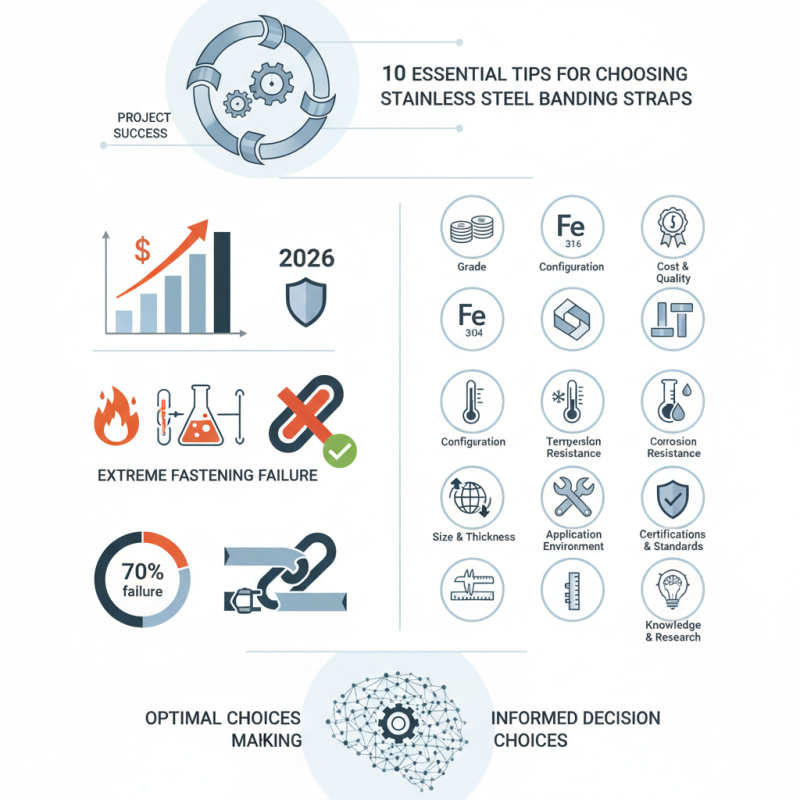
Choosing the right Stainless Steel Banding Straps can significantly impact your project's success. According to a recent study by Grand View Research, the global stainless steel banding market is projected to reach $2.5 billion by 2026. This growth is driven by increased industrial applications and demand for durable materials.
Stainless steel banding straps offer exceptional strength and corrosion resistance. In environments with extreme temperature variations or exposure to chemicals, these straps perform reliably. Statistics show that up to 70% of failures in applications can be traced back to improper fastening methods. Thus, selecting the right banding strap becomes crucial.
The market is saturated with options, but not all are created equal. Several factors influence the quality and suitability of stainless steel banding straps. Cost, grade, and configuration are essential considerations. Companies often face challenges when balancing quality and budget. Understanding these complexities can lead to better decision-making. Ultimately, knowledge about stainless steel banding straps prepares you for optimal choices in your projects.
Understanding the Different Types of Stainless Steel Banding Straps
When selecting stainless steel banding straps, it's essential to understand the different types available. Stainless steel banding comes in various grades, notably 201, 304, and 316. Each grade offers unique characteristics suited for specific environments. For example, 304 is widely used for general applications due to its excellent corrosion resistance. However, it may not perform well in highly saline areas. Conversely, 316 is specifically designed to withstand harsher conditions.
Choosing the right type also involves considering the thickness and width of the straps. Thicker straps provide more strength, but they can also be more challenging to work with. Alternatively, thinner straps are easier to manage but may not support heavy loads effectively. It's crucial to evaluate the application, as a strap unsuitable for the job can lead to significant failures. Many users overlook these aspects and face problems later.
Moreover, the method of fastening is vital. Some users prefer tensioning tools for a tighter grip, while others may opt for manual options. Each method has its pros and cons. Testing different styles can lead to better results. Knowing the environment and load requirements will contribute to informed decisions. Careful consideration of these factors enhances reliability and performance.
Factors to Consider When Selecting Stainless Steel Banding Straps
When selecting stainless steel banding straps, several factors play a critical role. Durability is key. Straps made from high-quality stainless steel tend to withstand harsh environments better than others. They resist rust and corrosion, making them ideal for outdoor and industrial applications. Consider the environment where the straps will be used. Extreme temperatures or exposure to chemicals can impact their performance.
Thickness and width matter, too. Thicker straps offer more strength and can support heavier loads. However, they may also be harder to work with. Conversely, thinner straps are more flexible but might not carry the same load capacity. When choosing, evaluate the specific needs of your project.
Also, pay attention to the finish of the straps. A polished finish may look better but could be less functional in rough situations. A mill finish provides better grip but lacks visual appeal. Weigh the pros and cons before making a commitment. Choosing the right stainless steel banding straps can significantly affect project outcomes. Investing time in research will lead to greater success.
The Importance of Corrosion Resistance in Banding Materials
Corrosion resistance is a critical factor when selecting stainless steel banding straps. These materials are often exposed to harsh environments. A strap that corrodes will fail to provide adequate support. Corrosion can weaken the metal and lead to structural issues. Thus, it's essential to choose materials specifically designed for durability.
Stainless steel comes in various grades, each with unique properties. Some grades are more corrosion-resistant than others. For instance, 316 stainless steel offers superior protection against saltwater environments, making it ideal for marine applications. On the other hand, 304 is suitable for less demanding situations. The choice dictates the strap's longevity and effectiveness.
It’s important to evaluate the application conditions. Humidity, chemicals, and temperature all affect corrosion levels. The right choice can save time and costs associated with replacements. However, many overlook these critical factors, leading to potential failures. Investing time in understanding these variables can enhance reliability and performance in the long run.
Choosing the Right Width and Thickness for Your Application
When selecting stainless steel banding straps, width and thickness are crucial factors. The right dimensions ensure that the straps can handle the specific loads and conditions of your application. For lighter applications, a narrower strap may suffice. However, for heavier items or more demanding environments, a wider and thicker strap is essential. This choice can significantly impact durability and performance.
Consider the materials you will be bundling. A thicker strap provides extra strength, which can be necessary for securing heavy-duty items. But thickness also adds weight. For portable applications, you might choose a thinner strap to ease transport. Additionally, the width affects the strap's ability to distribute pressure evenly. A strap that is too narrow may buckle under weight, while one that is too wide might be overkill and unnecessarily heavy.
While it may seem straightforward, choosing the wrong size can lead to issues. Straps that are too thin may not hold items securely. Conversely, overly thick straps can be cumbersome. Reflecting on past choices can inform current ones. Each application offers unique challenges, and finding the right balance requires careful consideration.
Evaluating the Cost-Effectiveness of Stainless Steel Banding Solutions
When selecting stainless steel banding solutions, cost-effectiveness is crucial. Many factors influence the total cost. This includes the type of stainless steel used, the coating, and the thickness. A thicker band typically offers greater durability but comes at a higher price. Evaluating the long-term benefits of durability against initial costs can be challenging. Some cheaper options might not withstand harsh environments, leading to potential failures over time.
Maintenance is another aspect to consider. Stainless steel is resistant to corrosion, but not all grades perform equally. Inexpensive banding straps may save money now but can lead to higher repair costs later. An informed choice requires balancing upfront investment against expected lifespan and maintenance needs.
Lastly, assess the intended use. Industrial applications demand more robust solutions compared to residential uses. Understanding specific requirements ensures that you choose the right grade and type. Reflecting on these aspects will lead to a more reliable decision. Cost-effectiveness is not just about the lowest price; it’s about making a choice that meets your long-term needs.
Cost-Effectiveness of Stainless Steel Banding Solutions
