What is a Fluid Pump and How Does Its Efficiency Impact Industrial Applications
In the realm of industrial applications, the importance of a fluid pump cannot be overstated. As defined by industry expert Dr. Emily Carter, a leading voice in fluid dynamics, "The efficiency of a fluid pump is not just a technical specification; it can significantly influence production capabilities and operational costs." This insight underscores the critical role fluid pumps play in various sectors, from manufacturing to oil and gas.
Fluid pumps are essential for moving liquids or slurries across systems, ensuring that processes run smoothly and efficiently. With industrial demands constantly evolving, the need for fluid pumps that demonstrate high efficiency has become increasingly vital. An efficient fluid pump can enhance workflow, reduce wear on equipment, and ultimately lead to cost savings. Moreover, advancements in pump technology are driving innovations that allow for better energy utilization, thereby contributing to the sustainability goals of many industrial operations.
As we delve deeper into the intricacies of fluid pumps and their operational efficiencies, it is essential to consider how these components affect not only individual businesses but also the broader industrial landscape. The following sections will explore different types of fluid pumps, their mechanisms, and the implications of their efficiency—painting a comprehensive picture of why fluid pumps are integral to modern industry.
Understanding Fluid Pumps: Definition and Functionality in Industry
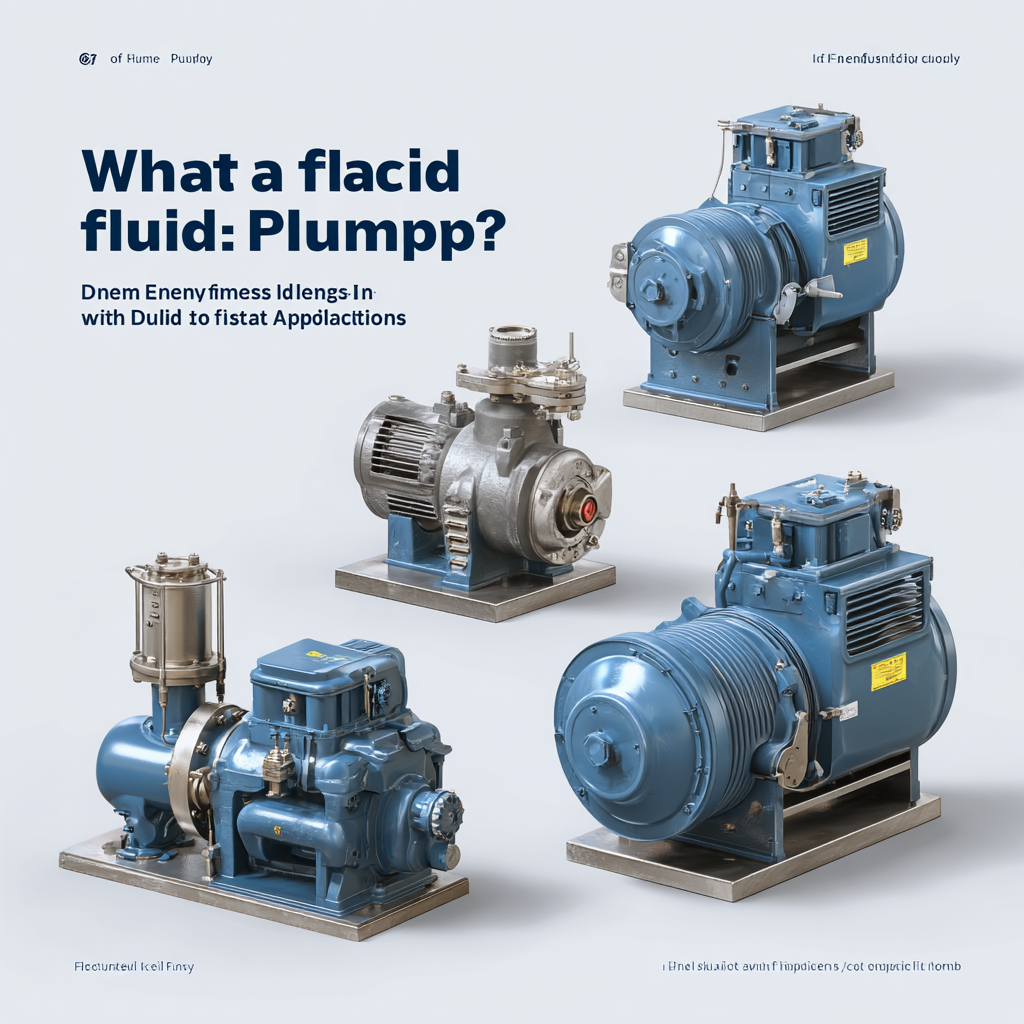
Fluid pumps play an essential role in various industrial applications by facilitating the movement of liquids and slurries. These devices are designed to transfer fluids by converting mechanical energy into hydraulic energy. Understanding the functionality and efficiency of fluid pumps is crucial for industries that rely on fluid management. For instance, centrifugal pumps are widely utilized due to their ability to handle large volumes of liquid and maintain consistent flow rates. Their design minimizes the energy required for fluid movement, making them a cost-effective solution in many applications.
The North American centrifugal pump market is expected to witness significant growth, increasing from $3.94 billion in 2025 to $4.74 billion by 2032, at a compound annual growth rate (CAGR) of 2.69%. This growth can be attributed to various factors, including the rising demand for efficient fluid handling across industries such as oil and gas, water treatment, and manufacturing. The efficiency of fluid pumps directly influences operational costs and overall productivity, making it imperative for businesses to invest in high-performance pump technologies that optimize energy use while maximizing output. As industries continue to evolve, advancements in pump design and engineering will play a critical role in enhancing fluid transportation systems.
Types of Fluid Pumps: Exploration of Common Variants and Their Uses
Fluid pumps are essential components in many industrial applications, designed to move fluids efficiently and effectively. Understanding the common types of fluid pumps and their specific uses can significantly enhance operational efficiency. Among the most common types are centrifugal pumps, positive displacement pumps, diaphragm pumps, and gear pumps. According to a market report by Grand View Research, the global pump market is expected to reach $70 billion by 2028, driven by increasing demand across industries such as oil and gas, water treatment, and chemical processing.
Centrifugal pumps, favored for their high flow rate and ability to handle large volumes of fluids, are widely used in water supply and sewage applications. Conversely, positive displacement pumps are ideal for applications requiring consistent flow rates at varying pressures, making them indispensable in the food and beverage industry. Diaphragm pumps are known for their ability to handle viscous fluids and slurries, while gear pumps are commonly used for hydraulic systems due to their capacity for generating high pressures.
**Tips:** When selecting a fluid pump, consider the viscosity and chemical compatibility of the fluid to ensure durability and efficiency. Regular maintenance can also enhance pump lifespan and performance, preventing costly downtimes. In industrial settings, proper pump sizing is crucial, as undersized pumps may lead to inadequate performance, while oversized ones can waste energy.
What is a Fluid Pump and How Does Its Efficiency Impact Industrial Applications - Types of Fluid Pumps: Exploration of Common Variants and Their Uses
| Type of Fluid Pump |
Description |
Common Uses |
Efficiency (%) |
| Centrifugal Pump |
Uses rotational energy to move fluid |
Water supply, HVAC systems |
70-90% |
| Positive Displacement Pump |
Moves fluid by trapping a fixed amount and forcing it through |
Industrial oils, food processing |
85-95% |
| Diaphragm Pump |
Uses a diaphragm to create pressure to move fluid |
Chemical transfer, wastewater treatment |
80-90% |
| Gear Pump |
Uses gears to pump fluid by trapping it between them |
Lubricants, hydraulic fluids |
75-90% |
| Peristaltic Pump |
Moves fluid through a tube by compressing it with rollers |
Pharmaceuticals, food and beverage |
70-85% |
Measuring Efficiency: Key Metrics for Evaluating Pump Performance
In evaluating fluid pumps, measuring efficiency is crucial for understanding their performance in industrial applications. Key metrics include volumetric efficiency, hydraulic efficiency, and overall efficiency. Volumetric efficiency, defined as the ratio of the actual flow rate to the theoretical flow rate, is particularly important for ensuring that pumps meet the required fluid delivery rates. According to a report by the Hydraulic Institute, leading manufacturers often achieve volumetric efficiencies greater than 90%, which is vital for reducing operational costs and optimizing resource utilization.
Hydraulic efficiency, on the other hand, measures how effectively the pump converts mechanical energy into fluid energy. It is determined by the ratio of the hydraulic power output to the input power. In many modern industrial settings, hydraulic efficiencies can exceed 85%, significantly impacting energy consumption and maintenance requirements. A study by the American Society of Mechanical Engineers indicates that enhancing hydraulic efficiency can lead to energy savings of up to 30% in large-scale operations. Therefore, continuously monitoring these efficiency metrics not only improves pump performance but also drives sustainability in industrial environments.
Impact of Pump Efficiency on Operational Costs in Industrial Settings
The efficiency of fluid pumps plays a crucial role in determining operational costs within industrial settings. According to the Hydraulic Institute, a pump's efficiency can significantly affect energy consumption, which accounts for approximately 25-30% of total operational costs in manufacturing plants. For instance, a pump operating at just 10% below its optimal efficiency can lead to annual energy expenses increasing by thousands of dollars, especially in large-scale operations where pumps run continuously.

Moreover, the impact of pump efficiency extends beyond immediate energy costs. A report from the U.S. Department of Energy indicates that upgrading to a more efficient pump can reduce energy consumption by 20-50%, translating into substantial savings over time. Additionally, efficient pumps require less maintenance and have a longer lifespan, further minimizing costs associated with downtime and repairs. Therefore, focusing on pump efficiency is not just a technical consideration but a strategic move towards optimizing operational budgets and enhancing overall productivity in industrial applications.
Future Trends in Fluid Pump Technology: Innovations for Enhanced Efficiency
The future of fluid pump technology is poised to be transformed by innovative advancements that enhance efficiency and sustainability. AI-powered operational intelligence is becoming integral to optimizing pump performance, allowing for real-time monitoring and predictive maintenance. This leads to reduced downtime and operational costs, thus significantly impacting industrial applications. Additionally, the incorporation of Internet of Things (IoT) solutions will enable smarter control systems, improving the reliability and efficiency of fluid transport in various sectors.
Sustainable water treatment technologies are also evolving, focusing on decentralized infrastructure to combat issues such as flood prevention and water scarcity. Innovations in green hydrogen applications are set to play a crucial role in reducing emissions, particularly in agriculture. These advancements will drive significant changes in how industries manage their resources, contributing to a more sustainable future.
Tips: Consider integrating AI tools within your pumping systems to maximize operational efficiency. Additionally, staying updated with decentralized infrastructure trends can help you adapt to emerging challenges in water management. Investing in green energy solutions not only supports sustainability but can also align with regulatory compliance in many regions.