What Are the Top China Fuel Filter Manufacturers?

Choosing among China’s top fuel filter manufacturers requires more than comparing catalog prices. A serious review should examine filtration efficiency, pressure resistance, sealing quality, material traceability, and production consistency. These details matter when a filter faces dusty roads, contaminated fuel, vibration, and long service intervals.

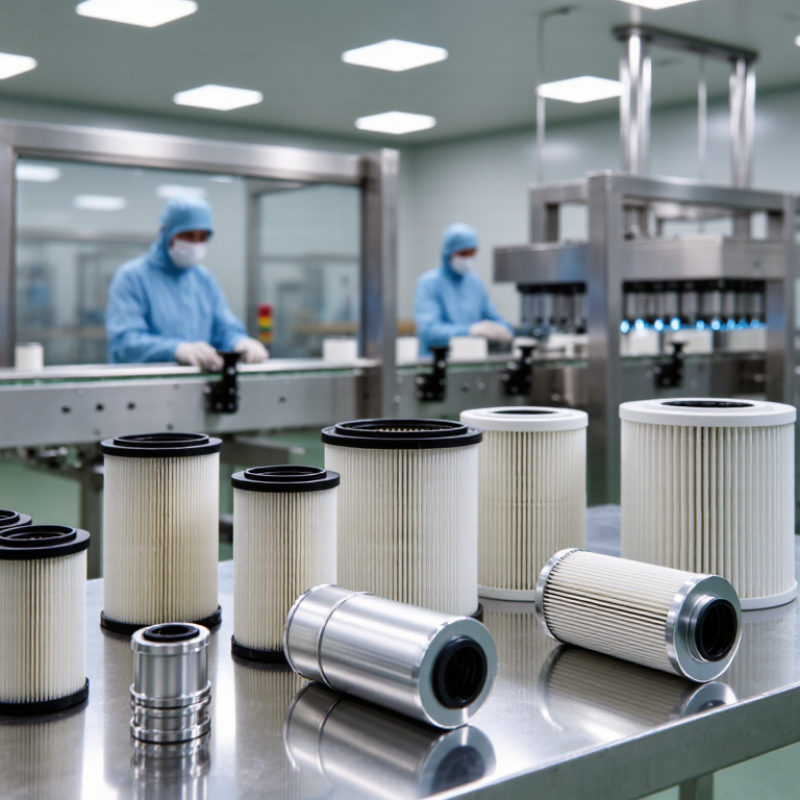
Dr. Michael R. Hennessey, a filtration engineer with experience in diesel systems, once stated, “A fuel filter protects the entire fuel system, not merely the engine.” This principle gives the comparison a practical direction. A reliable manufacturer should show test data, explain its media structure, and identify how each filter controls water, rust, and fine particles. Factory audits also matter. Clean assembly areas, automated pleating equipment, and visible quality checkpoints often reveal more than polished brochures.

This overview will examine leading Chinese manufacturers through an evidence-based lens. It will consider product range, manufacturing capability, export experience, certifications, customization support, and after-sales reliability. Some suppliers specialize in heavy trucks. Others focus on construction equipment, agricultural machinery, or passenger vehicles. The best choice depends on application, fuel conditions, replacement frequency, and purchasing volume.

No ranking is perfect. Public information can be incomplete. Some impressive claims deserve deeper verification. Buyers should request samples, inspection records, and performance reports before placing large orders. A low unit price may look attractive, yet inconsistent dimensions can cause leakage or installation problems. In contrast, a well-engineered fuel filter can reduce maintenance interruptions and protect expensive injection components. The following manufacturers are therefore assessed for measurable value, not reputation alone.
What Are the Top China Fuel Filter Manufacturers?

What Is a Fuel Filter and Why Does Manufacturer Selection Matter?

A fuel filter is a barrier between the fuel tank and the engine. It removes dust, rust, water, and manufacturing residue before these particles reach sensitive components. In diesel systems, even small water droplets can damage high-pressure pumps and injectors. In gasoline systems, restricted flow may cause hard starting, hesitation, or poor acceleration. The filter must match the engine, fuel type, pressure range, and service interval.

Manufacturer selection matters because filter quality depends on more than appearance. Reliable China-based manufacturers should provide clear filtration ratings, media specifications, seal materials, and burst-pressure data. They should also maintain traceable production records and repeatable quality inspections. Factory audits can reveal practical details, such as clean assembly areas, calibrated testing equipment, and controlled storage. Small details matter. A polished catalog proves little without test evidence.

Performance should be checked under real conditions, including cold starts, vibration, water exposure, and extended operating hours. A filter that performs well in a laboratory may behave differently in dusty transport environments. That assumption fails. Buyers should request sample testing and compare pressure drop, dirt-holding capacity, leak resistance, and replacement consistency. Cost deserves attention, but the cheapest unit may create more service calls and downtime. Some specifications remain unclear, and that uncertainty deserves honest review before a long-term supply decision.

How Are China’s Top Fuel Filter Manufacturers Evaluated?

How Are China’s Top Fuel Filter Manufacturers Evaluated?

Evaluating China’s leading fuel filter manufacturers requires more than checking catalog prices. Buyers examine factory experience, production capacity, and quality records. A reliable supplier should explain its filtration materials clearly. It should also provide test data for flow rate, pressure resistance, and particle removal. These figures need traceable testing methods, not vague claims.

Factory visits can reveal important details. Inspectors may review incoming material checks, assembly lines, sealing processes, and final inspections. Clean work areas matter because small particles can affect filter performance. Experienced evaluators also inspect sample consistency across different production batches. One good sample proves little.

Documentation supports professional judgment. Quality certificates, laboratory reports, and process-control records should match the actual product. Independent testing can confirm performance under heat, vibration, and changing fuel conditions. Communication is another practical measure. Technical staff should answer questions directly and admit product limits. That honesty builds trust.

Cost still matters, but an unusually low quotation deserves careful review. It may reflect thinner materials, weaker seals, or limited testing. Not always, though. Local production advantages can reduce expenses without reducing quality. Evaluation is therefore not perfectly simple. Some reports look complete but lack useful testing details. Buyers should compare evidence, inspect samples, and monitor field performance over time. Good decisions often require patience, repeated checks, and a willingness to question early assumptions.

What Are the Top China Fuel Filter Manufacturers? - How Are China’s Top Fuel Filter Manufacturers Evaluated?

Evaluation Dimension What Is Evaluated Verifiable Evidence Suggested Weight Why It Matters
Automotive Quality Management Effectiveness of the quality system for automotive production, corrective action, process control, and customer-specific requirements. Valid IATF 16949 certificate, certificate scope, issuing certification body, audit status, and documented corrective-action process. 20% IATF 16949 is specifically designed for automotive quality management and is more sector-focused than a general quality certificate.
Product Performance Filtration efficiency, contaminant-holding capacity, pressure drop, flow stability, sealing performance, and resistance to fuel exposure. Product test reports, laboratory methods, test conditions, sample identification, and comparison with applicable customer specifications. 20% A fuel filter must protect the fuel system while maintaining adequate fuel flow throughout its service life.
Applicable Standards Use of suitable test and design references for fuel filters used in road vehicles, diesel systems, gasoline systems, or other applications. Test plans referencing relevant standards such as ISO 4020 or ISO 19438 where applicable, together with customer or vehicle-program requirements. 10% Standards make test methods and acceptance criteria more consistent and easier to audit.
Manufacturing Capability Control of pleating, bonding, molding, crimping, welding, assembly, cleanliness, and final inspection. Process flow charts, control plans, equipment list, preventive-maintenance records, in-process inspection data, and factory-audit results. 15% Stable processes reduce variation between production batches and support reliable high-volume supply.
Material and Media Control Consistency of filter media, adhesives, seals, housings, valves, and other components exposed to fuel. Approved supplier list, incoming inspection records, material certificates, change-control procedure, and fuel-compatibility test results. 10% Material variation can affect filtration efficiency, durability, dimensional fit, and chemical resistance.
Traceability and Testing Ability to trace raw materials, production batches, inspection results, and released products. Lot codes, barcode or ERP records, retention samples, calibration certificates, and documented release procedures. 10% Traceability supports faster containment, root-cause analysis, recalls, and warranty investigation.
Development and Validation Capability to convert application requirements into drawings, prototypes, design reviews, validation plans, and production approvals. APQP records, design and process FMEA, control plans, prototype reports, dimensional studies, and validation results. 10% Structured development lowers launch risk and helps confirm that the filter matches the intended fuel-system application.
Delivery and Supply Reliability Production capacity, lead-time control, inventory planning, packaging, export documentation, and business-continuity planning. Capacity plan, historical delivery records, safety-stock policy, logistics procedure, packaging specifications, and contingency plans. 10% Reliable delivery is essential for vehicle production, aftermarket distribution, and service-part availability.
Environmental and Workplace Management Control of waste, energy use, chemical handling, worker safety, and environmental compliance. ISO 14001 and ISO 45001 certificates where applicable, environmental permits, safety records, and documented operating controls. 5% Responsible operating practices reduce compliance, continuity, and supply-chain risks.
Total Evaluation Weight 100% Use documented evidence rather than promotional claims when comparing suppliers.

Which China Fuel Filter Manufacturers Are Leading the Market?

China’s leading fuel filter manufacturers are increasingly judged by verification, not catalogue size. In 2024, China produced about 31.28 million vehicles, according to the China Association of Automobile Manufacturers. This scale supports a deep supplier network. Strong factories typically serve passenger cars, commercial vehicles, and replacement markets. They also maintain documented production records.

Testing matters more than slogans. Leading suppliers usually control filter-paper porosity, sealing strength, burst resistance, and contaminant capacity. Their laboratories may use ISO 5011-style cleanliness testing and traceable batch sampling. MarketsandMarkets estimated the global automotive filters market at about USD 19.3 billion in 2023. The report projects steady growth through 2028, although it covers more than fuel filters alone. That distinction matters.

Export-oriented Chinese manufacturers often combine automated pleating with manual inspection at the final stage. A useful factory audit should examine raw-material certificates, pressure-test records, and rejection rates. Ask for repeatability data, not only a single test result. Some suppliers disclose impressive efficiency figures but provide limited long-term field evidence. That is a weakness.

Product consistency remains the practical dividing line. A filter that performs well in a laboratory can behave differently after vibration, heat cycling, or poor storage. Buyers should compare samples from several production batches. Price still influences decisions, but unstable dimensions can increase installation time and warranty costs. The market is competitive, yet supplier transparency is uneven. That deserves closer scrutiny.

What Are the Top China Fuel Filter Manufacturers?

Which China Fuel Filter Manufacturers Are Leading the Market?

Market-leading fuel filter manufacturers are commonly evaluated by filtration precision, water-separation capability, and suitability for modern fuel-injection systems. The chart presents representative nominal filtration ratings used across major fuel-filter applications; a lower micron value indicates finer particle filtration. Actual specifications vary by vehicle, engine, fuel system, and filter design.

Reference framework: common automotive filtration engineering practices and fuel-system requirements described in SAE J905 and ISO 16332. The data are technical benchmarks rather than company or brand rankings.

What Products and Technologies Do Chinese Manufacturers Offer?

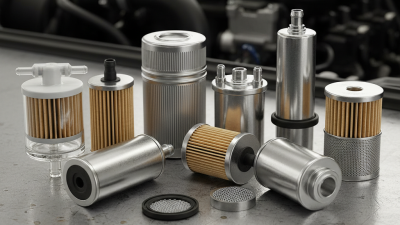
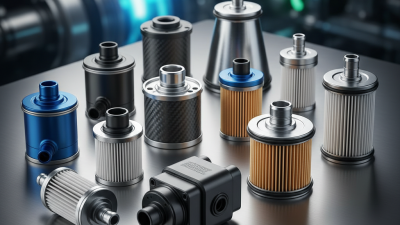
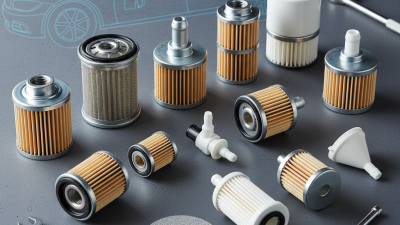
Chinese fuel filter manufacturers now offer more than basic spun-paper elements. Their product ranges often include diesel filters, gasoline filters, oil-water separators, hydraulic filters, and air intake filters. Some suppliers also produce filter assemblies with drain valves, sensors, heaters, and transparent bowls. These details matter in cold starts and dusty operating environments.

Manufacturing technology varies widely. Established factories may use automated pleating, ultrasonic welding, leak testing, and controlled resin application. Multi-layer media can capture fine particles while maintaining acceptable fuel flow. Several producers develop synthetic, cellulose, and hybrid media for different engines. Laboratory checks may include filtration efficiency, pressure-drop testing, burst strength, and salt-spray evaluation. However, supplier claims are not always equally clear. A certificate alone does not prove long service life.

Tips: Request test reports for the exact part number. Check micron ratings, flow capacity, seal materials, and operating temperature. Ask whether samples come from current production. Inspect the filter after field use, not only after a clean laboratory test. Small packaging details can reveal weak quality control. Traceability labels help, but they can still be incomplete. A careful buyer should compare test data, fitment records, and independent inspection results before approving a large order.

How Can Buyers Choose the Right China Fuel Filter Manufacturer?

Choosing the right China fuel filter manufacturer requires more than comparing unit prices. Buyers should examine filtration performance, production consistency, and communication quality. A low quotation may hide thin filter media, weak seals, or unstable testing procedures.

Request technical drawings, material specifications, and recent inspection records. Confirm the filter’s micron rating, flow capacity, pressure resistance, and operating temperature. Ask whether the factory performs leak tests on every production batch. Clear evidence matters. Certificates should be verified with the issuing organization, not accepted from a sales email alone.

A factory audit can reveal important details. Check raw material storage, assembly cleanliness, labeling controls, and rejected-product handling. Ask for samples from different production dates, then compare weight, dimensions, and filtration results. This small test often exposes variation. Experienced manufacturers should explain their quality controls without vague promises. They should also provide traceability for key components and respond quickly to technical questions.

Communication deserves careful attention. Can the supplier understand your vehicle application and service conditions? Can engineers discuss design changes directly? A polished catalog is not proof of reliable manufacturing. I would also review packaging strength, lead-time records, warranty terms, and corrective-action reports. Some buyers focus too heavily on price. That is a costly habit. The best supplier is not always the largest one, but the one that consistently proves its process, admits limitations, and improves when problems appear.