
Why Choose a Clip On Study Lamp for Your Desk?

A focused desk needs light where the work happens, not across the whole room. A Clip On Study Lamp can attach to a desk edge, shelf, or headboard, keeping its base away from books and notebooks. That small change matters when space is tight. It can also make a shared desk easier to arrange, though the clamp still needs a stable surface.

The right lamp should offer more than a compact shape. Check its clamp range, arm reach, brightness settings, and light direction before buying. A flexible neck can help illuminate a workbook without shining into your eyes or onto a screen. Warm or adjustable color settings may feel comfortable during evening study, but personal preference matters. There is no single setting that suits every task.

A practical choice. Also, mind the details. Some clamps can mark delicate finishes, and some arms sag after frequent repositioning. Testing the grip and movement at home is sensible, even if product descriptions sound convincing. This guide explores why a Clip On Study Lamp may suit your desk, what features deserve attention, and where its limits show. Good lighting helps, but it cannot fix every distracting workspace.
Why Choose a Clip On Study Lamp for Your Desk?

What Defines a Clip-On Study Lamp?

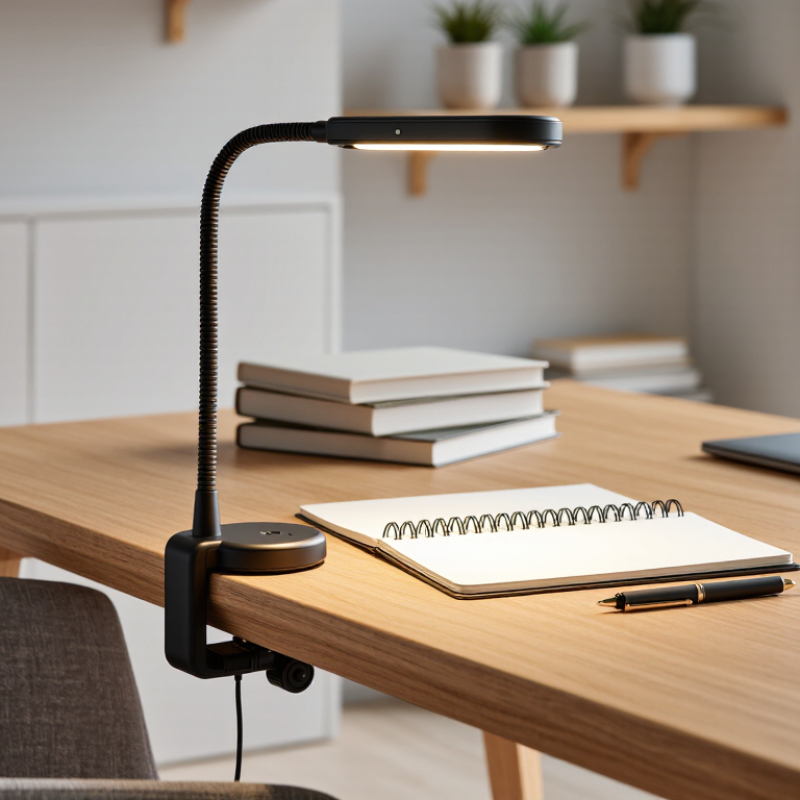
A clip-on study lamp is a compact task light clamped to a desk edge, shelf, or bed frame. Unlike a weighted lamp, it uses the surface for support and frees space for notebooks, a keyboard, or a cup. Its defining parts are a gripping clamp, a movable arm or neck, and a light head aimed at the work area. Some models use a flexible gooseneck; others have hinged joints. Both should hold position without slowly drooping.

A useful study lamp lets you light a page without shining directly into your eyes. Check that the clamp fits the desk thickness and grips evenly; thin veneers can mark under excess pressure. The light should feel steady and suit reading or writing, not merely look bright in a product photo. A dimmer or adjustable color temperature can help with daytime notes or late study, though extra settings are not automatically better. They can distract, too. Keep the lamp head clear of paper and curtains, and notice where its cord runs. Small details matter. A clip-on lamp saves space, but it cannot fix poor desk placement or harsh room lighting. That is easy to miss.

How Does Its Desk-Clamping Mechanism Work?

Why Choose a Clip On Study Lamp for Your Desk?

How Does Its Desk-Clamping Mechanism Work?

A clip-on study lamp holds its position with a simple adjustable clamp. One jaw rests above the desk edge, while the other presses against its underside. Turning the screw or knob moves the lower jaw upward, creating pressure that keeps the lamp in place. The lamp’s arm then directs light toward a book, keyboard, or sketchpad without taking up much desk space.

That matters.

The contact surfaces often have rubber or foam pads. These help reduce slipping and protect the desk from scratches, though they cannot compensate for every surface. Before attaching the lamp, check that the desk edge fits within the clamp’s stated opening range. Slide the clamp on fully, then tighten the knob by hand until the lamp feels steady. Avoid forcing it; excessive pressure may mark a soft wood or damage a thin panel.

A quick stability check is useful. Gently move the lamp arm and look for slipping or wobbling before leaving it over your work. Keep the clamp clear of cables and drawers, and make sure the light does not pull the lamp sideways. Some desks have rounded edges, thick trim, or fragile finishes that make clamping less reliable. In those cases, repositioning may help, but the fit can still be imperfect. A clamp saves space, yet it needs a suitable desk edge.

What Benefits Does It Offer for Studying?

A clip-on study lamp can make a small desk feel more usable without taking space from notebooks or a laptop. Its clamp attaches to a shelf, desk edge, or headboard, while an adjustable arm lets you direct light toward the page. That focused pool of light can make handwritten notes easier to see when the rest of the room is dim. It also helps keep your hands and open books from casting shadows across the work.

Placement makes a real difference. Angle the lamp from the side rather than directly toward your eyes or a glossy screen. Less glare, perhaps. A flexible neck is useful when you switch between reading a textbook and writing in a workbook, but frequent repositioning can loosen some joints over time. Check that the clamp fits securely and does not press against a fragile edge. Small detail, big help.

The lamp’s brightness should suit both the task and the room. A setting that works for close reading may feel harsh during a late study session, so adjustable output is practical. A neutral-toned light can keep printed pages looking clear, though personal comfort varies. One limitation is easy to miss: a compact lamp may not illuminate a wide desk evenly. If you keep moving your papers into the bright spot, try changing the lamp’s angle or distance before adding another light.

Which Features Matter When Choosing a Clip-On Lamp?

A clip-on lamp should fit your desk before you consider its extra features. Measure the desk edge and check the clamp’s opening range. A padded jaw can grip without leaving marks, while a weak or narrow clamp may wobble when you adjust the arm. I learned that the hard way. My first choice looked compact, but it slipped on a thick shelf.

Arm reach matters, too. The light should fall across your notebook without shining straight into your eyes or reflecting off a screen. Look for a shade that directs light downward and an arm that stays in position. Adjustable brightness helps when you move from reading paper to typing. A warmer setting can feel gentler in the evening; a neutral setting often makes printed text easier to inspect. Check whether the lamp uses a stable, low-glare light, and see if its controls are easy to reach. Small detail, big difference. Also consider the cord length or charging method, especially if the nearest outlet is behind a bookcase. Don’t assume a more flexible arm is always better; some joints loosen over time, and that can become annoying.

Why Choose a Clip-On Study Lamp for Your Desk?

Which Features Matter When Choosing a Clip-On Lamp?

These illustrative scores use a 1–5 practical-priority scale; they are not survey results or product measurements. A secure clip and adjustable arm help position the light, while brightness control and glare management can make studying more comfortable.

Which Desk Setups Suit a Clip-On Study Lamp?

A clip-on study lamp suits a compact desk where a regular lamp would steal space from books, a keyboard, or a notebook. It can also work well on a shared table: attach it when you study, then remove it when the surface needs to be clear. Check the desk edge before buying. The clamp needs a firm, accessible lip, and its opening must fit the edge without squeezing delicate finishes. A thin dorm desk often works. A rounded or unusually thick edge may not.

On a computer desk, place the lamp to one side of the screen and aim the beam at your notes, not your eyes. This can reduce distracting reflections. For a loft bed or a small craft table, a flexible neck helps direct light into a tight work area. Keep the cord clear of drawers and moving desk parts. A height-adjustable desk needs extra thought; the cable must move freely as the surface rises. Not every setup is ideal. I would avoid clamping onto glass or a wobbly shelf, even if the lamp seems light. Test the position with a page open and your usual chair in place. Small adjustments matter.