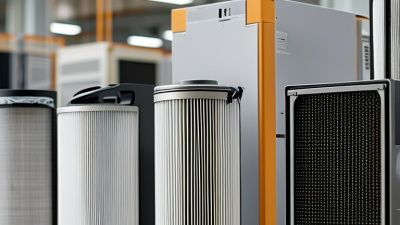
Why Choose Filtration Filters for Industrial Use?
Industrial facilities face a constant challenge: controlling contaminants without interrupting production. Dust, oil mist, metal particles, and process residues can damage equipment quickly. Filtration filters provide a practical barrier between harmful particles and sensitive systems. They support cleaner air, safer fluids, and more stable operations. The result is not always dramatic. Sometimes, it is simply a pump that keeps running through another production shift.
Dr. Richard Wakeman, a recognized authority on solid-liquid separation, stated, “Filtration is a separation process in which a mixture is divided by a filter medium.” This principle remains simple, but choosing the correct filtration filters requires technical judgment. Engineers must review particle size, flow rate, temperature, pressure, chemical compatibility, and maintenance access. A filter rated for fine particles may restrict flow. A cheaper filter may require frequent replacement. That hidden cost matters.
No filter is perfect.
In real plants, performance also depends on installation quality and operating habits. A poorly sealed housing can undermine an excellent filter element. Excessive differential pressure can signal loading, incorrect sizing, or neglected maintenance. These details deserve attention before equipment failure occurs. Still, selection is not always clean-cut. Production goals, energy use, budget limits, and environmental targets can conflict. Reliable filtration filters are therefore chosen through evidence, testing, and careful review. They should match the process, not merely the product brochure. A measured decision may feel slower today. It can prevent costly surprises tomorrow.
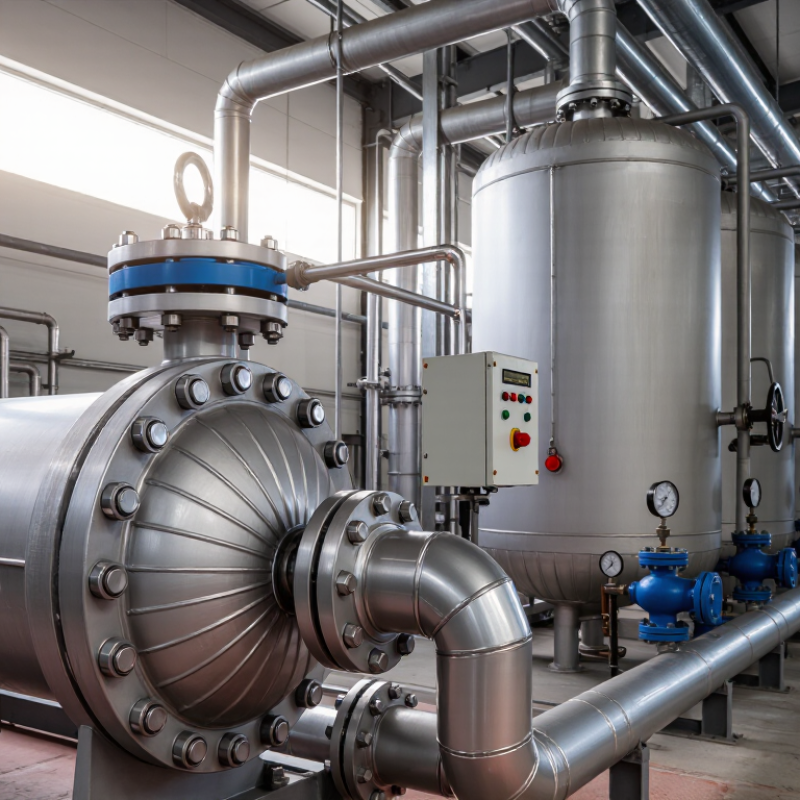
Industrial filtration filters are engineered barriers that remove solids, droplets, or gases from process streams. They may use mesh, cartridges, bags, membranes, or layered media. In a factory, the filter sits inside a real system: pumps push liquid through it, fans move dusty air, and pressure gradually builds.
The choice depends on particle size, flow rate, temperature, chemical compatibility, and allowable pressure drop. A filter rated at five microns will not automatically remove every smaller contaminant. That assumption causes trouble. The U.S. Environmental Protection Agency’s Air Pollution Control Cost Manual reports that fabric filters can achieve collection efficiencies above 99% under suitable operating conditions. However, moisture, poor sealing, and overloaded media can reduce performance. Grand View Research’s Industrial Filtration Market report estimated the global market at about US$33 billion in 2023, showing strong demand for controlled production and cleaner process environments. These figures describe market scale, not guaranteed equipment results.
Tips: Check the filter’s test standard, not only its micron rating. Record inlet and outlet pressure weekly. Replace media before collapse or bypass occurs. The EPA notes that pressure drop affects fan energy and operating cost. In practice, a slightly larger filter can reduce energy use, but only after testing the actual flow. Engineers should also review disposal requirements and maintenance access. A filter that performs well in a laboratory may fail beside a hot, vibrating production line.
Industrial filtration filters protect equipment, workers, and production quality by separating unwanted solids, droplets, or gases from air and liquids. Their value becomes clearer when a pump begins to strain or dust settles on a finished surface. The U.S. Environmental Protection Agency identifies filtration as a practical method for reducing airborne particulate exposure, when systems are correctly selected and maintained.
Air or liquid enters the filter housing under pressure. The filter medium then captures contaminants through sieving, interception, diffusion, and sometimes electrostatic attraction. Coarse particles remain on the surface, while smaller particles may travel deeper into fibrous layers. For air systems, ISO 16890 classifies performance by ePM1, ePM2.5, and ePM10 particle groups. High-efficiency systems follow stricter testing methods. A HEPA filter, for example, is commonly rated to remove at least 99.97% of 0.3-micrometre particles under defined test conditions, according to U.S. Department of Energy guidance.
As contaminants accumulate, differential pressure rises across the filter. Operators can track this change with gauges or digital sensors. A rising reading usually means higher fan or pump energy and reduced flow. The International Energy Agency has repeatedly linked industrial efficiency gains with better equipment control and maintenance. Yet filtration is not always “better” when resistance keeps increasing. I have seen maintenance plans focus on capture efficiency while ignoring pressure loss. That is an expensive mistake. Filter selection should balance particle size, flow rate, moisture, temperature, chemical compatibility, and replacement intervals.
Industrial filtration filters target particles that ordinary cleaning cannot control. They can capture dust, metal fumes, welding smoke, oil mist, fibers, and some biological aerosols. With activated carbon, systems may also reduce selected volatile organic compounds and unpleasant gases. Liquid filters can remove suspended solids, rust, process residues, and some microorganisms, depending on membrane ratings and operating conditions.
The control target must be measurable. OSHA limits respirable crystalline silica exposure to 50 micrograms per cubic meter over eight hours. The World Health Organization’s 2021 air-quality guidelines recommend only 5 micrograms per cubic meter for annual PM2.5 exposure. These figures show why particle size and concentration matter. A filter rated for coarse dust may not capture fine particles efficiently. No filter removes everything. Humidity, pressure loss, poor seals, and delayed replacement can reduce real performance. This part is often underestimated.
Tips: Identify the contaminant first. Check particle size, chemical compatibility, flow rate, and required efficiency. Use independent test data, such as ISO 16890 or relevant HEPA test methods. Track pressure drop during operation. A practical maintenance log is imperfect, but it can reveal sudden loading, leaks, or process changes before workers notice them.
Industrial filtration filters protect equipment, products, and workers from unwanted particles. Their benefits become clear on a factory floor. Dust settles near air intakes, metal fines enter hydraulic oil, and moisture damages compressed-air systems. A properly selected filter captures these contaminants before they create larger problems.
Filtration can extend pump life and reduce unexpected shutdowns. Cleaner fluids also support steadier pressure and more consistent production quality. In many facilities, operators notice the difference through fewer clogged valves and longer service intervals. Some filters also support safer working conditions by reducing airborne particles around processing equipment. Small gains matter.
However, filtration is not a universal solution. A filter rated for coarse dust may perform poorly against fine oil mist. That assumption can fail. Engineers should check flow rate, temperature, chemical compatibility, pressure drop, and contaminant size before installation. Field experience shows that an oversized filter may waste space, while an undersized unit can restrict flow. Neither choice is ideal.
Reliable filtration also depends on maintenance. A pressure gauge, inspection log, and planned replacement schedule provide useful evidence. Waiting for a visible failure is risky. A filter may appear clean while its internal media is already saturated. Regular monitoring helps teams adjust replacement intervals based on real operating conditions, not guesswork. This approach improves efficiency while keeping performance measurable.
| Filter Type | Typical Removal Range | Typical Efficiency or Rating | Main Industrial Applications | Key Benefits | Important Considerations |
|---|---|---|---|---|---|
| Pleated Panel Filter | Coarse dust and airborne particles, commonly around 1–10 micrometres | Often classified within ISO coarse to ePM10 ranges, depending on construction | Pre-filtration, ventilation systems, manufacturing areas and air-handling units | Low initial cost, simple replacement, reduced loading on downstream filters and broad availability | Not designed for fine particulate control; performance depends on airflow and dust loading |
| Bag Filter | Dry dust, powder and process particles, including fine particles below 10 micrometres | Dust-collection efficiency can exceed 99% when correctly selected and maintained | Cement, woodworking, food processing, mineral handling, metalworking and bulk-material transfer | Large dust-holding capacity, suitable for high dust concentrations and cleanable in many designs | Requires suitable pulse-cleaning, correct air-to-cloth ratio and protection against condensation |
| Cartridge Filter | Fine dry dust, fumes and submicrometre particles, depending on the media | Many industrial designs provide more than 99% particle collection efficiency | Welding fumes, laser cutting, pharmaceutical powders, thermal spraying and compact dust collectors | Compact footprint, high filtration area and effective fine-particle capture | Can experience rapid pressure-drop increase when exposed to heavy or sticky dust loads |
| HEPA Filter | Fine aerosols and particles approximately 0.1–1 micrometre in size | At least 99.97% efficiency at 0.3 micrometre under the commonly used HEPA test criterion | Cleanrooms, pharmaceutical production, medical environments and high-containment process areas | Very high particle removal, improved air cleanliness and protection for sensitive processes | Higher pressure drop than coarse filters; requires sealing, integrity testing and pre-filtration |
| Activated Carbon Filter | Selected vapours, odours and many volatile organic compounds through adsorption | Capacity is expressed by adsorption capacity and breakthrough time rather than a particle-efficiency percentage | Solvent handling, chemical processing, odour control and industrial air purification | Reduces gaseous contaminants and odours that particle filters cannot remove | Does not remove all gases; humidity, concentration, contact time and carbon type affect service life |
| Liquid Depth Filter | Suspended solids and particles in process liquids; nominal ratings commonly range from about 1–100 micrometres | Nominal or absolute ratings vary by media and test method | Water treatment, coatings, chemicals, food and beverage processing and industrial fluid circulation | Good dirt-holding capacity, gradual loading and compatibility with many liquid filtration systems | Filter selection must consider viscosity, temperature, chemical compatibility and required flow rate |
| Membrane Filter | Very fine particles, microorganisms and macromolecules, depending on pore size | Common pore sizes include approximately 0.1–10 micrometres; smaller pores provide finer separation | Sterile processing, biotechnology, pharmaceutical liquids and high-purity water systems | Precise separation, consistent pore structure and high product-quality control | Sensitive to fouling; may require pre-filtration, cleaning or controlled operating pressure |
| Magnetic Separator Filter | Ferrous metal particles and magnetic debris in liquids or bulk materials | Performance depends on magnetic strength, particle size, flow velocity and separator design | Metalworking fluids, mining, recycling, ceramics and bulk-material processing | Low consumable usage, reusable separation media and protection of pumps and processing equipment | Does not remove nonmagnetic solids or dissolved contaminants without an additional filtration stage |
Choosing an industrial filter starts with the process, not the product catalogue. Engineers should define the fluid, temperature, pressure, flow rate, and contaminant size. A filter that handles dust may fail quickly with sticky oil. Material compatibility matters too. Corrosion can begin inside an apparently sound housing.
Maintenance planning should begin before installation. Place pressure gauges before and after the filter. A rising pressure difference often signals loading. Inspect seals during scheduled shutdowns, and replace damaged elements immediately.
Cleaning methods must match the filter material. Excessive air pressure can tear delicate media. Keep spare elements sealed, labelled, and stored away from moisture.
Records improve reliability. Note pressure readings, cleaning dates, operating hours, and replaced parts. These details help teams identify unusual wear instead of guessing. In practice, the first selection is not always correct. A filter may meet the specification but restrict flow during peak production. That mistake deserves review. Operators should also verify readings against actual process conditions, because instruments can drift. Small oversights matter. Regular training, documented procedures, and independent inspections support safer decisions and more stable performance.