2026 Top Tempest Filters for Global Buyers?

The 2026 market for tempest filters is becoming more demanding. Global buyers now compare airflow performance, particle capture, service life, and total ownership cost. Product names alone are not enough. A filter that performs well in a clean factory may struggle in a humid coastal plant or a dusty workshop.

“Filter selection should begin with operating conditions, not the product label,” says Dr. Elena Morris, an independent industrial filtration specialist. Her point is practical. Buyers need to examine airflow volume, pressure drop, temperature, moisture exposure, filter dimensions, and replacement access. Certification claims also deserve careful checking. Some product pages remain vague.

Small details matter.

This guide reviews leading tempest filters for international buyers in 2026. It considers technical specifications, supplier transparency, maintenance requirements, shipping practicality, and after-sales support. Regional availability is included because a high-performing filter becomes less useful when replacement stock takes months to arrive. We also consider compatibility with existing housings and monitoring systems.

No ranking is perfect. Public test data can be limited, and real-world performance depends on installation quality. That weakness should remain visible. Buyers should request current datasheets, independent test evidence, warranty terms, and sample units before making large purchases.

The strongest option is not always the most expensive. It is the filter that delivers stable protection, predictable maintenance, and verified performance under actual working conditions.
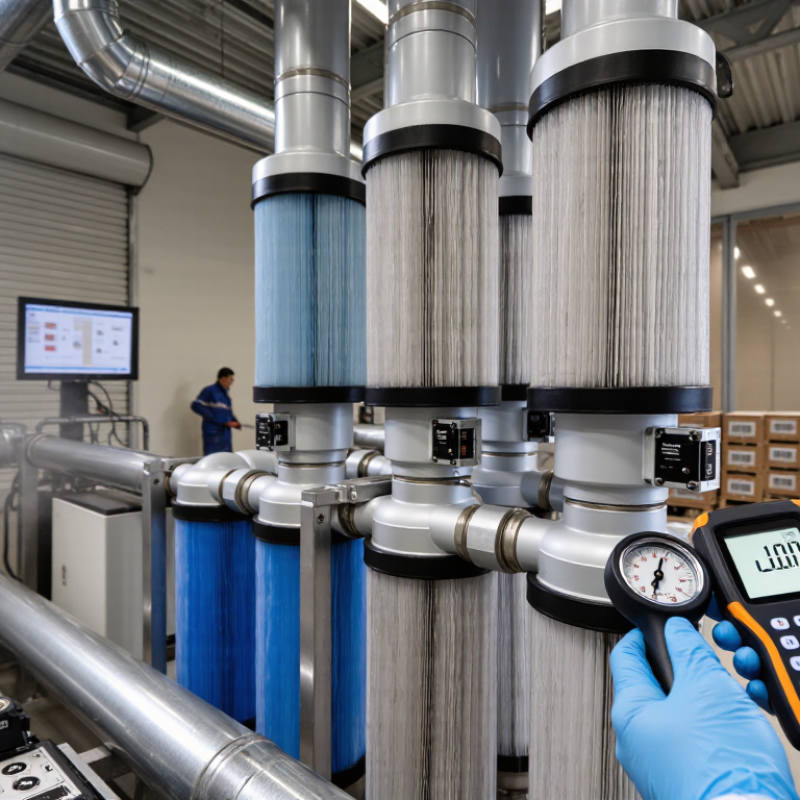
2026 Top Tempest Filters for Global Buyers?

What Are Tempest Filters and How Do They Work?

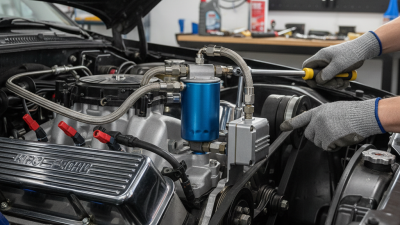
In aviation maintenance, a tempest filter usually refers to an aircraft engine oil filter or air-oil separator. It protects moving parts from metal dust, carbon, and other contaminants. The exact design depends on the engine and installation.

An oil filter uses pleated media inside a sealed housing. As oil passes through, the media holds particles while clean oil continues toward bearings and other components. A pressure-relief bypass valve helps maintain oil flow if the media becomes restricted. Some designs also include an anti-drainback feature, which helps retain oil after shutdown.

Air-oil separators work differently. Baffles or internal chambers slow crankcase vapors, allowing oil droplets to collect and return to the engine.

Selection requires more than checking the filter size. Buyers should verify thread dimensions, flow direction, pressure limits, filtration rating, seal material, and approved application data. Traceable documentation matters for international shipments and regulated maintenance programs. A part number alone may not prove compatibility.

A common mistake is choosing the finest filtration rating without checking flow requirements. That choice can increase pressure loss. It may also create operational risk. Filter inspection can reveal unusual metal particles or dark deposits, but appearance alone is not a complete diagnosis. Maintenance personnel should follow the engine manual, use clean tools, and record installation details. The filter protects the system, but it cannot correct worn bearings, contaminated oil, or poor maintenance practices.

Key Types of Tempest Filters for Different Applications

2026 Top Tempest Filters for Global Buyers?

Key Types of Tempest Filters for Different Applications

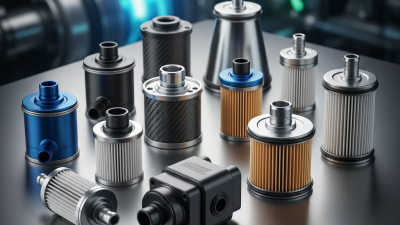
Selecting tempest filters starts with the air problem, not the product label. For offices and schools, pleated panel filters offer practical dust control and simple replacement. Higher-efficiency filters suit hospitals, laboratories, and clean production areas. ASHRAE Standard 52.2 evaluates filters through minimum efficiency reporting values, helping buyers compare particle performance more consistently.

Bag filters work well in large air-handling units with heavy dust loads. Their deeper media can hold more particles than basic panels. HEPA filters are better for critical spaces requiring very fine particle removal. The U.S. EPA reports that properly sized portable cleaners can reduce indoor particle concentrations, although results depend on airflow and room conditions. Fit matters. A small filter cannot solve a large-air problem.

Activated carbon filters target odors and selected gases. Coalescing filters support compressed-air systems by removing oil aerosols and liquid moisture. Industrial buyers should also examine pressure drop, temperature limits, humidity, and maintenance access. The International Energy Agency notes that buildings consume roughly 30% of global final energy, so excessive resistance can increase fan energy use. That trade-off deserves more attention. In practice, buyers may overvalue efficiency ratings and undervalue replacement logistics. WHO’s 2021 air-quality guidelines set annual PM2.5 guidance at 5 µg/m³, but local conditions still shape the correct specification. Testing airflow on site remains wiser than trusting a catalog alone.

2026 Top Tempest Filters for Global Buyers

Key filter types and reference efficiency benchmarks for different applications

MERV values are based on ASHRAE 52.2 minimum efficiency categories, while H13 and H14 values represent EN 1822 classifications at the most penetrating particle size. These benchmarks are not directly interchangeable because testing methods differ. Activated carbon is designed mainly for gas and odor removal rather than particle filtration.

How to Compare Filtration Efficiency, Capacity, and Durability

2026 Top Tempest Filters for Global Buyers

When comparing Tempest filters, filtration efficiency should be checked at the intended airflow, not in isolation. A high-rated filter may create excessive pressure drop. That can increase fan energy and reduce system performance. Ask for test data showing particle capture, airflow, and pressure drop together. Look for results from recognized independent laboratories. Marketing percentages alone are not enough.

Capacity describes how much dust the filter can hold before airflow becomes restricted. Compare dust-holding test results, service intervals, and the expected dust level at your site. A warehouse near a busy road needs different capacity from a clean office. Check the filter’s dimensions carefully. A poor seal around the frame can waste more performance than a small efficiency difference. It happens more often than buyers expect.

Durability includes the frame, pleats, adhesive, gasket, and resistance to moisture. Inspect samples after vibration, high humidity, and repeated handling. A strong-looking filter can still deform during transport. For global purchasing, request packaging details, batch records, replacement availability, and clear installation instructions. Standards help, but they do not replace site testing. Some comparisons remain imperfect because laboratory dust cannot fully copy local conditions. Recheck assumptions before placing a large order.

Top Tempest Filter Options for Global Buyers in 2026

For global buyers in 2026, the best Tempest filter option depends on dust load, airflow, and replacement access. High-efficiency pleated filters suit offices, clinics, and light industrial rooms. Deeper media filters work better where fans run continuously. Compact panel filters fit tight housings, but they may clog faster.

Airflow matters more than marketing claims. ASHRAE Standard 52.2 measures particle removal through MERV ratings, while ISO 16890 reports performance by particle-size range. Buyers should request both efficiency and pressure-drop data. The U.S. EPA reports that indoor pollutant levels can reach two to five times outdoor levels, making leakage control essential. A well-rated filter performs poorly inside a badly sealed frame.

For dusty workshops, choose strong mechanical construction, washable pre-filtration, and clear change indicators. For occupied spaces, look for verified ePM1 or fine-particle performance under ISO 16890. The World Health Organization’s 2021 air-quality guidelines set annual PM2.5 guidance at 5 µg/m³, showing why small-particle control deserves attention. Not every high-efficiency option is practical. Some increase energy use sharply. Some specifications also appear incomplete. Check test conditions, dimensions, gasket quality, and local stock before ordering. A filter that fits today may become expensive during a delayed shipment.

Global Standards, Sourcing Factors, and Maintenance Requirements

2026 Top Tempest Filters for Global Buyers?

Global Standards, Sourcing Factors, and Maintenance Requirements

Global buyers should evaluate Tempest filters through measurable performance, not catalog language. ISO 16890 classifies air filters by PM1, PM2.5, and PM10 removal efficiency. ASHRAE Standard 52.2 uses MERV ratings and controlled test conditions. These systems are not identical. A quoted efficiency can mislead when test methods differ.

Check the filter’s frame material, gasket quality, airflow range, and pressure-drop curve. The World Health Organization recommends an annual PM2.5 guideline of 5 µg/m³. That target makes leakage control and correct installation especially important in dusty facilities. The U.S. Environmental Protection Agency reports that indoor pollutant levels may reach two to five times outdoor concentrations. Small gaps matter.

Maintenance decides real performance. Record differential pressure before installation, during operation, and near replacement. Follow the manufacturer’s limit, but review it against actual fan capacity. Inspect seals monthly in heavy-dust environments. Replace damaged media immediately. Do not clean disposable filter media unless the technical document permits it.

Keep records.

Sourcing teams should request independent test reports, batch traceability, fire classification, and storage guidance. Filter dimensions should be verified physically; drawings can contain errors. A lower purchase price may increase energy use through higher resistance. The International Energy Agency links building energy efficiency with better operational control, yet filter-specific savings vary by system. That uncertainty deserves attention. A perfect specification is rarely possible, especially across climates, voltage systems, and maintenance cultures.

2026 Top Tempest Filters for Global Buyers? - Global Standards, Sourcing Factors, and Maintenance Requirements

Filter Category Typical Application Typical Particle or Contaminant Control Relevant Global Standard Typical Initial Pressure Drop Recommended Replacement or Service Trigger Key Sourcing Factors
Coarse Dust Pre-Filter Outdoor-air intakes, HVAC systems, equipment rooms, and dusty industrial areas Large dust, lint, insects, and visible debris; generally used as a protective first stage ISO 16890; product fire performance may also be evaluated under EN 13501-1 or local requirements Approximately 30–100 Pa, depending on media area and airflow Replace when visibly loaded or when pressure drop reaches the equipment manufacturer’s limit Frame rigidity, moisture resistance, gasket quality, dust-holding capacity, and correct face dimensions
Fine-Particulate Filter Commercial buildings, clean production support areas, schools, hospitals, and general ventilation Fine dust, pollen, and respirable particulate fractions; efficiency depends on the selected ISO ePM class ISO 16890, commonly specified by ISO ePM1, ePM2.5, or ePM10 performance Approximately 50–150 Pa at rated airflow Replace based on final pressure drop, airflow reduction, or scheduled preventive maintenance Verified test data, media uniformity, low-energy operation, seal integrity, and availability of standard sizes
High-Efficiency EPA Filter Controlled environments, laboratories, pharmaceutical support spaces, and sensitive manufacturing areas Very fine airborne particles; EPA classifications are tested at the most penetrating particle size according to the applicable standard EN 1822 and ISO 29463; classification may include E10, E11, or E12 depending on tested efficiency Approximately 100–250 Pa, depending on grade and airflow Replace after reaching the specified final pressure drop or failing integrity verification Individual filter test certificate, leakage control, low-emission sealant, traceability, and packaging protection
HEPA Filter Healthcare areas, cleanrooms, laboratories, isolation rooms, and critical process ventilation At least 99.95% efficiency for H13 and at least 99.995% for H14 at the most penetrating particle size under EN 1822 classification EN 1822 and ISO 29463; installation leakage testing may follow ISO 14644-3 methods Approximately 150–300 Pa at rated airflow Replace at the final pressure-drop limit, after failed integrity testing, or when damaged or contaminated Scan-test documentation, gasket or gel-seal compatibility, leakage testing, shock-resistant construction, and clean packaging
ULPA Filter Semiconductor, precision optics, nanotechnology, and highly controlled cleanroom processes Extremely fine particulate; U15–U17 grades provide higher efficiency than standard HEPA classifications EN 1822 and ISO 29463, with grade and leakage class confirmed by individual testing Approximately 200–500 Pa, subject to filter design and airflow Replace according to pressure-drop limits, integrity-test results, or cleanroom qualification requirements Particle-count test records, low outgassing materials, dimensional accuracy, seal compatibility, and contamination-controlled logistics
Activated Carbon Filter Odor control, process-air treatment, museums, laboratories, and buildings exposed to gaseous pollutants Selected gases and vapors through adsorption; performance varies significantly by carbon type, bed depth, humidity, and contact time ISO 10121-1 and ISO 10121-2 for gas-phase air-cleaning media and devices, where applicable Approximately 50–200 Pa for panel or pleated designs; deeper beds may be higher Replace based on breakthrough monitoring, odor return, contaminant loading, or validated service life Carbon type and mass, target contaminant, humidity tolerance, residence time, sealed packaging, and independent performance data
Coalescing Oil-Mist Filter Compressed-air systems, pneumatic equipment, instrumentation air, and industrial process lines Liquid water aerosols, oil aerosols, and fine solid particles; not intended to remove all gaseous contaminants ISO 12500 series for compressed-air filter testing; ISO 8573-1 for compressed-air purity classes Approximately 70–250 mbar, depending on filter grade and operating conditions Replace at the specified differential pressure or when condensate drainage and air quality deteriorate Rated flow at operating pressure, drain design, pressure rating, element compatibility, test method, and spare-element availability
Hydrophobic Membrane Filter Vent protection, sterile air applications, laboratory equipment, and moisture-sensitive process systems Particles, microorganisms, and liquid water ingress when the membrane and assembly are correctly specified Application-specific validation; microbial-retention claims should be supported by recognized validation methods and documented test conditions Usually higher than coarse pre-filters; confirm the supplier’s value at the required flow and pressure Replace after wetting, blockage, integrity-test failure, or the validated service interval Membrane material, pore-size claim, sterilization compatibility, housing material, integrity testing, and clean handling
Buyer’s note: Pressure-drop ranges are indicative design values rather than universal limits. Final selection should be based on actual airflow, operating pressure, temperature, humidity, contaminant profile, installation orientation, local regulations, and the equipment manufacturer’s approved specifications.