
How to Choose the Right Pump Fuel for Global Buyers?
Choosing the right pump fuel for global buyers is not simply a price comparison. It is a technical and commercial decision shaped by engines, climates, regulations, storage systems, and supply reliability. A fuel that performs well in a European passenger car may not suit a generator operating in a hot, humid port. Octane rating matters for gasoline engines. Cetane quality matters for diesel ignition. Sulfur content can affect emissions equipment and maintenance schedules.
Energy historian Daniel Yergin once said, “Energy is the lifeblood of modern civilization.” His statement explains why fuel selection deserves careful attention. Pump fuel is part of a wider operating system, not an isolated product. Buyers should review applicable standards, such as EN 228, EN 590, or ASTM D4814, while confirming local requirements. Product certificates, laboratory results, batch information, and traceable delivery records also deserve close review.
Small details can become expensive problems. A vehicle fleet may experience difficult starting after a seasonal fuel change. A generator may lose efficiency when fuel storage is poorly managed. A cheaper offer may exclude testing, additives, insurance, or dependable delivery. It is easy to overlook these points.
There is no perfect purchasing formula. Conditions change. Specifications can be misunderstood. Even experienced buyers need independent verification before signing a contract. This guide examines fuel grades, quality indicators, documentation, logistics, and supplier credibility. It aims to help global buyers ask sharper questions and choose pump fuel with greater confidence. Perhaps confidence should remain cautious. That is usually safer.
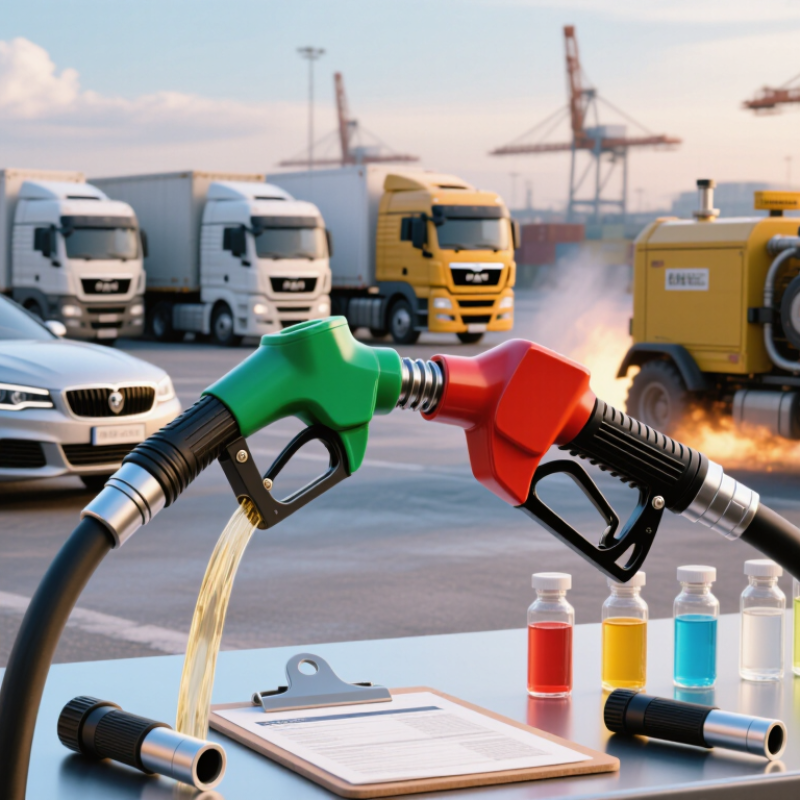
Understanding Pump Fuel Types and Their Core Differences
Choosing pump fuel starts with understanding how each type behaves in an engine. Gasoline ignites through a spark and is rated mainly by octane. Higher octane can prevent knocking, but it does not automatically create more power. Diesel uses compression ignition and relies on cetane quality, lubricity, and clean combustion. It usually delivers strong low-speed torque and better fuel economy, but cold conditions can affect its flow.
Ethanol-blended gasoline can reduce petroleum use, yet higher ethanol content may absorb moisture and require compatible fuel systems. Biodiesel blends can improve renewable content, though storage temperature, oxidation, and filter cleanliness need closer attention. Liquefied petroleum gas is stored under pressure and burns cleanly, but it requires suitable tanks, fittings, and trained handling. The difference is practical, not merely chemical.
Check the local fuel standard, sulfur limit, seasonal grade, and engine approval before purchasing. A fuel certificate should show density, flash point, octane or cetane value, and contamination results. Small details matter. A cold morning can expose poor diesel flow. A humid storage tank can reveal water problems. No checklist is perfect. I would still compare delivery records with an independent laboratory test, especially when buying across borders. Price alone is a weak guide; transport conditions, storage life, equipment compatibility, and after-sales technical support can change the real operating cost.
How to Choose the Right Pump Fuel for Global Buyers? - Understanding Pump Fuel Types and Their Core Differences
| Fuel Type | Typical Pump Label | Primary Engine Type | Key Quality Metric | Typical Energy Content | Main Advantages | Compatibility and Purchasing Considerations | Typical Environmental Considerations |
|---|---|---|---|---|---|---|---|
| Standard Gasoline | Unleaded gasoline; commonly offered in several octane grades | Spark-ignition engines | Octane rating, usually expressed as RON or AKI depending on the market | Approximately 32–34 MJ/L | Widely available; suitable for most conventional gasoline vehicles; easy cold starting | Use the minimum octane specified by the vehicle manufacturer. RON and AKI are different rating systems and should not be compared directly without conversion. | Produces tailpipe carbon dioxide and regulated pollutants. Lower-sulfur grades support modern emission-control systems. |
| E5 Gasoline | Gasoline containing up to 5% ethanol by volume | Most modern spark-ignition engines | Octane rating plus ethanol content and fuel-quality compliance | Approximately 31–34 MJ/L, depending on blend composition | Usually offers good compatibility; ethanol can provide octane-boosting benefits | Confirm the vehicle, motorcycle, boat, generator, and storage-system approval. Ethanol can absorb moisture and may affect some older seals, hoses, and fuel-system materials. | May reduce fossil-fuel use compared with gasoline without ethanol, although the overall benefit depends on ethanol production and supply-chain practices. |
| E10 Gasoline | Gasoline containing up to 10% ethanol by volume | Most modern spark-ignition engines | Octane rating, ethanol percentage, and applicable national fuel standard | Approximately 30–33 MJ/L | Common in many markets; generally compatible with vehicles designed for current gasoline specifications | Check the owner’s manual before use in older vehicles, marine engines, small engines, or equipment with long-term fuel storage. Fuel economy per litre can be slightly lower than with ethanol-free gasoline. | Can lower the fossil-carbon intensity of the fuel, but tailpipe emissions remain and the benefit varies by feedstock and production method. |
| Conventional Diesel | Automotive diesel; often sold as low-sulfur or ultra-low-sulfur diesel | Compression-ignition engines | Cetane number, sulfur content, lubricity, density, and cold-flow properties | Approximately 35–36 MJ/L | High volumetric energy density; strong low-speed torque; suitable for heavy-duty and long-distance applications | Use the fuel grade required by the engine and emissions system. Cold-weather grades may be necessary in low-temperature regions. Gasoline must not be substituted for diesel. | Modern low-sulfur diesel enables particulate filters and other after-treatment systems. Diesel combustion can produce nitrogen oxides and particulates if not properly controlled. |
| B7 Biodiesel Blend | Diesel containing up to 7% fatty-acid methyl ester (FAME) | Most modern diesel engines approved for the applicable blend standard | Cetane, oxidation stability, water content, cold-filter plugging point, and FAME percentage | Approximately 34–36 MJ/L | Can reduce the fossil portion of diesel while requiring little or no vehicle modification when approved | Verify the regional specification and vehicle approval. Storage life, oxidation stability, cold-weather performance, and compatibility with older fuel systems require attention. | Lifecycle greenhouse-gas performance depends heavily on the feedstock, land-use effects, processing, and transport. Tailpipe emissions are not eliminated. |
| Higher Biodiesel Blends | B10, B20, B30, or B100, indicating the approximate biodiesel percentage | Approved diesel engines and specially compatible equipment | Biodiesel content, cetane, oxidation stability, viscosity, and cold-flow performance | Approximately 32–35 MJ/L, depending on the blend level | Greater renewable content than low-level blends; can be useful where biodiesel supply is established | Compatibility is engine-specific. Higher blends may require approved hoses, seals, filters, tanks, and maintenance procedures. B100 may have more demanding storage and low-temperature requirements. | Potential lifecycle emissions reductions vary by feedstock and certification. Higher blends may influence nitrogen-oxide, particulate, and other emission profiles. |
| HVO Renewable Diesel | Renewable diesel or paraffinic diesel; often identified by a paraffinic-fuel specification | Diesel engines specifically approved for paraffinic fuel | Cetane number, density, lubricity, cold-flow properties, and paraffinic-fuel compliance | Approximately 34–35 MJ/L | High cetane; very low sulfur and aromatic content; can be used as a drop-in fuel in approved diesel applications | Do not assume universal compatibility. Confirm manufacturer approval, fuel-standard compliance, warranty conditions, and local availability before purchasing. | Lifecycle greenhouse-gas reductions can be substantial when made from suitable waste or residue feedstocks, but results depend on feedstock origin and production pathway. |
| LPG / Autogas | Liquefied petroleum gas; commonly propane–butane fuel | Dedicated or converted spark-ignition engines | Propane–butane composition, vapor pressure, and applicable gas-fuel specification | Approximately 25–27 MJ/L in liquid form | Often lower fuel cost in markets with established supply; generally produces fewer particulates than conventional diesel | Requires a compatible fuel system, pressure regulator, tank, and safety equipment. Storage capacity and refueling infrastructure vary significantly by country. | Can produce lower particulate and some pollutant emissions than gasoline or diesel, but it is still a fossil fuel in most supply chains. |
| CNG | Compressed natural gas | Dedicated or converted spark-ignition engines; some dual-fuel systems | Methane content, gas quality, pressure, and heating value | Approximately 45–50 MJ/kg; volumetric energy depends on storage pressure | Low particulate emissions; suitable for fleets where dependable gas refueling infrastructure exists | Vehicles require high-pressure storage systems, commonly around 200–250 bar. Driving range, compressor availability, and local gas composition are important purchasing factors. | Usually has low particulate emissions, but methane leakage during production, distribution, and use can significantly affect lifecycle climate performance. |
| Buyer’s note: Fuel suitability depends on the vehicle manufacturer’s approval, local fuel standards, climate, storage period, taxation, and infrastructure. Always compare the fuel label and specification used in the target country rather than relying on the name alone. | |||||||
Related Posts
-
Top 10 Pump Fuel Suppliers for Global Buyers
-
China Best Fuel Pump Manufacturers for Global Buyers?
-
What Is Pump Fuel and How Does It Work?
-

2025 Top 10 Fuel Pump Tools: Boost Your Efficiency with Data-Driven Picks
-
How to Choose the Right Air Tool Oil for Your Needs?
-

Top 10 Pneumatic Oil Pumps for Global Buyers in 2026?