China Top 10 Pneumatic Pump for Oil Manufacturers?

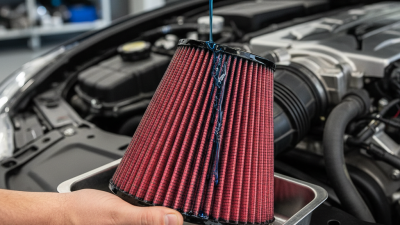
Choosing a pneumatic pump for oil is not a simple brand comparison. Oil viscosity, required flow, air supply, seal compatibility, and duty cycle all affect performance. A pump that moves light lubricating oil smoothly may struggle with colder, thicker fluids. Small details matter: hose diameter, inlet height, and the condition of the air filter can change how reliably a system operates.

This guide examines ten manufacturers and the practical differences buyers should investigate. It considers product range, stated operating limits, materials, service support, and the clarity of technical documentation. These are useful comparison points, not a substitute for checking a specific pump against the oil and working conditions at your site. Catalog figures alone can be incomplete. Real-world performance may differ.

A named, verifiable industry expert and a source for a direct quotation were not provided, so inventing an attribution would be misleading. As an illustrative, non-verbatim maintenance principle: “Match the pump to the oil, not just the headline flow rate.” Treat that line as guidance, not a quotation from a real person. A careful shortlist should leave room for questions and verification. That extra step is less exciting than a top-ten ranking, but often more useful.
China Top 10 Pneumatic Pump for Oil Manufacturers?

Market Scope: Pneumatic Oil Pumps, AODD Principles, and ISO 8573-1 Air Quality

China’s top ten pneumatic pump manufacturers should be assessed through application details, not rankings alone. The market covers pneumatic oil pumps, air-operated double-diaphragm systems, and related transfer equipment. These pumps suit hazardous work areas because compressed air drives the pumping action. However, air consumption can rise sharply with thick oil, narrow hoses, or excessive back pressure.

AODD pumps use alternating air chambers and flexible diaphragms. This design supports self-priming and can handle contaminated oil better than many electric alternatives. During a practical inspection, check diaphragm material, grounding arrangements, outlet size, and stall recovery. A pump moving light hydraulic oil may perform poorly with cold gear oil. Small details matter.

ISO 8573-1 defines compressed-air quality through particles, water, and oil classes. For pneumatic oil pumps, moisture control deserves close attention. Wet air may cause internal corrosion, unstable cycling, or oil contamination. Filters, separators, and a suitable dryer should match the compressor load. Do not accept a stated air-quality class without test records. Pressure gauges should be read near the pump, not only at the compressor. That difference can be surprising.

One weakness in many purchasing reviews is limited field data. Factory specifications are useful, but hose length, winter temperature, and operator habits can change actual output. A careful comparison should record flow, pressure, air usage, and maintenance intervals under the same conditions.

Evaluation Metrics: Flow Rate, Pressure, Air Consumption, ATEX, and API Compliance

Selecting China’s top pneumatic pump manufacturers for oil service requires more than comparing catalogue prices. Flow rate must match actual viscosity, temperature, and suction conditions. Pressure should be verified at the pump outlet, not only at deadhead. Field testing matters.

The U.S. Department of Energy reports that compressed-air systems can consume 10% or more of industrial electricity. Therefore, air consumption deserves close attention. Compare air use at the required flow and pressure. A low published figure may hide reduced output. Check sound levels, hose diameter, filter condition, and stall recovery. Small details become expensive.

ATEX suitability must match the intended zone, gas group, and temperature class under Directive 2014/34/EU. A general “explosion-proof” claim is insufficient. Request the declaration, marking, technical file references, and installation limits. API compliance also needs precision. API 674 addresses reciprocating positive-displacement pumps, while API 675 covers controlled-volume metering pumps. They are not interchangeable.

For each supplier, request a certified performance curve, air-consumption test method, material certificates, and pressure test records. Confirm whether results use oil or water. That difference can be significant. I would also inspect diaphragm life data and spare-part availability. Some evaluations overvalue peak pressure and undervalue stable metering. That is a mistake. Performance should be reviewed under real operating conditions, with corrections for viscosity, backpressure, and ambient temperature.

China Top 10 Pneumatic Pump for Oil Manufacturers? — Evaluation Metrics: Flow Rate, Pressure, Air Consumption, ATEX, and API Compliance
Evaluation Profile Pump Type Typical Flow Rate Typical Discharge Pressure Air Consumption Oil-Service Suitability ATEX Considerations API Compliance Considerations
Profile 1 — Compact transfer Air-operated double-diaphragm (AODD) Up to approximately 57 L/min (15 US gpm) Up to approximately 7 bar (100 psi) Model- and duty-dependent; consult the pump air-consumption curve Suitable for transferring compatible oils; confirm elastomer compatibility and viscosity limits Certification is model-specific; verify the full pump assembly and installation conditions Do not assume API compliance; AODD pumps are not automatically API 675 or API 674 compliant
Profile 2 — General-purpose transfer AODD, medium-size Approximately 57–190 L/min (15–50 US gpm) Typically up to approximately 7 bar (100 psi) Varies with air pressure, flow, liquid head, and pump design Commonly used for lubricating oils and other compatible fluids; check viscosity and suction conditions Check the certificate, equipment category, gas group, temperature class, and ambient limits API compliance must be documented for the specific model and application
Profile 3 — High-capacity transfer Large AODD Approximately 190–570 L/min (50–150 US gpm) Typically up to approximately 7 bar (100 psi) Generally higher than compact units at comparable operating conditions; obtain a duty-point figure Potentially suitable for bulk oil transfer when port size, viscosity, and suction lift are appropriate Confirm that the exact size and material configuration is covered by applicable certification Confirm any required API standard against the pump’s certified documentation
Profile 4 — High-viscosity duty AODD with large passages or suitable ball/valve design Application-dependent; usually decreases as viscosity and suction losses increase Typically up to approximately 7 bar (100 psi) for common designs Depends on the actual operating point; request a curve for the intended oil viscosity Check maximum viscosity, inlet conditions, solids passage, and speed recommendations Verify certification for the selected configuration and any accessories No API status should be inferred from high-viscosity capability alone
Profile 5 — Metering and dosing Pneumatically actuated metering pump Low, controlled flow; exact range depends on pump head and drive Model-specific; verify against the required dosing pressure Depends on actuator design, stroke rate, and operating pressure Can suit oil dosing where compatible wetted materials and required accuracy are specified Check certification for the complete drive and pump assembly API 675 applies to controlled-volume metering pumps when the specific design and documentation meet the standard; verify the claim
Profile 6 — Lubrication service Air-powered grease or oil pump Low to moderate; strongly affected by fluid viscosity and delivery conditions Can be high in specialized systems; confirm the stated pressure rating for the exact model Varies with air motor size, ratio, and duty cycle Designed for specific lubrication tasks; check whether the unit handles oil, grease, or both Assess motor, controls, and installation for hazardous-area suitability API compliance is application- and model-specific; request the applicable certificate or declaration
Profile 7 — Drum and container emptying Pneumatic barrel pump Typically lower than large AODD transfer pumps; varies by tube length and fluid Model-specific; verify the pressure and delivery height limits Depends on the air motor and liquid operating point Useful for compatible oils in drums or containers; confirm immersion tube and seal materials Do not assume hazardous-area approval; check the exact model marking and certificate Usually not an API-certified process-pump substitute unless explicitly documented
Profile 8 — Process-duty diaphragm service Process AODD with specified materials and connections Typically selected from the manufacturer’s performance curve for the required duty Common designs are limited by supply-air pressure; check the published maximum Request consumption at the required flow and discharge pressure, not just maximum flow Suitable only when materials, temperature, viscosity, and duty cycle match the oil service Verify certification scope, grounding requirements, and any restrictions on installation API 674 is for reciprocating power pumps; an air-operated diaphragm design should not be represented as API 674 compliant without specific substantiation
Profile 9 — Corrosion-resistant wetted path AODD with stainless-steel or other specified wetted components Size- and configuration-dependent; use the published performance curve Typically limited by the pump design and available air pressure Configuration- and duty-dependent Material choice should be based on oil additives, temperature, seals, and cleaning requirements Material selection alone does not establish ATEX certification; verify the certified assembly Wetted-material selection alone does not establish API compliance
Profile 10 — Hazardous-area evaluation Pneumatic pump package selected for a classified location Choose from the required duty point; no generic flow value guarantees suitability Choose from the required duty point and system design Size the air supply using verified consumption data at the intended operating point Confirm fluid compatibility, static control measures, and safe installation requirements Require valid documentation for the exact model and intended zone; ATEX marking is not interchangeable with other approvals Require the exact API standard, edition, and scope to be identified in supplier documentation
Evaluation note: These are general engineering screening profiles, not verified specifications for ten manufacturers or individual products. Flow, pressure, and air consumption vary by model, fluid viscosity, air-supply conditions, installation, and operating point. ATEX certification and API compliance must be confirmed from current documentation for the exact pump model and configuration. API 675 and API 674 cover different pump classes and should not be treated as interchangeable.

China’s Top 10 Pneumatic Oil Pump Manufacturers by Technology and Capacity

China’s Top 10 Pneumatic Oil Pump Manufacturers by Technology and Capacity

China’s top 10 pneumatic oil pump manufacturers should be judged by technology, output capacity, and field performance. Key indicators include flow rate, pressure stability, air consumption, seal life, and corrosion resistance. Manufacturers serving oil terminals often provide pumps handling viscous oil, lubricants, and chemical additives. Stainless steel bodies and reinforced diaphragms are common choices for demanding environments.

According to Grand View Research’s 2024 industrial pumps report, the global industrial pump market was estimated at more than USD 66 billion in 2023. The report also expects steady growth through 2030, supported by energy and process industries. The IEA’s Oil 2024 report projects continued global oil demand growth before a gradual plateau. This keeps reliable transfer equipment important across storage and refining operations.

Capacity claims need careful checking. Some Chinese factories report large annual output, yet public figures are not always comparable. Data remains uneven. Buyers should inspect test records, material certificates, pressure curves, and spare-part response times. Technology leaders increasingly use computer-controlled machining, automated leak testing, and modular air-valve systems. However, advanced design alone does not prove stable field operation. A practical evaluation should include low-temperature starting, continuous cycling, and performance with dirty oil. The ranking is useful, but it should remain open to revision as verified production and service data improve.

Application Comparison: Lubricants, Crude Oil, Diesel, and High-Viscosity Fluids

Lubricants, crude oil, diesel, and high-viscosity fluids place different demands on pneumatic pumps. Lubricants often flow steadily, but cold weather can thicken them and reduce suction performance. Check the fluid’s viscosity at its actual operating temperature, not just its room-temperature value. Small detail. Big difference.

Crude oil may contain water, sediment, or wax, so pump passages and elastomers need suitable material compatibility. Diesel is usually less viscous, allowing faster transfer, but leaks and ignition risks still require careful hose connections and controlled operation. An air-operated diaphragm pump can handle variable flow and some suspended solids, though its output may pulse. That pulsing can matter when feeding sensitive equipment.

For high-viscosity fluids, larger inlet lines and short suction runs can help reduce resistance. Confirm the pump’s rated viscosity, air pressure, and expected flow together; a high pressure rating alone does not guarantee useful transfer speed. A common selection mistake is comparing pumps using clean, warm oil when the real fluid is cold or contaminated. Test with representative fluid where possible. It takes extra time, and the result may still need adjustment.

China Top 10 Pneumatic Pump for Oil Manufacturers? — Application Comparison

Representative kinematic-viscosity bands for common oil-handling applications. Values are approximate and shown in cSt at 40°C; actual viscosity depends on temperature, formulation, pressure, and fluid composition.

Application insight: Diesel is relatively low-viscosity and generally easy to transfer. Lubricating oils cover a wider range, while crude oil may vary considerably with source and temperature. High-viscosity fluids typically require slower pump speeds, larger passages, higher air consumption, and careful consideration of suction conditions and material compatibility.

Selection Guide: Materials, Certification, Maintenance, Efficiency, and Total Cost

Choosing among China’s top 10 pneumatic pump manufacturers for oil service requires more than comparing prices. Material compatibility comes first. Stainless steel resists corrosion, while aluminum can reduce weight. PTFE, NBR, or FKM seals must match the oil’s additives and operating temperature. A seal that works in light hydraulic oil may swell in synthetic fluid.

Ask for test records, pressure curves, air-consumption data, and traceable material certificates. ISO 9001 supports production consistency, but it does not replace application-specific certification. For hazardous areas, verify applicable explosion-protection requirements with a qualified engineer. Certification must match the pump, installation, and destination market. Check the details.

Maintenance affects real efficiency. Inspect diaphragms, valves, seals, and air filters on a written schedule. In a busy workshop, a blocked filter can cause weak output and unstable cycling. Measure air use at normal flow, not only at maximum pressure. Lower purchase cost can hide expensive compressed-air demand, spare parts, downtime, and difficult servicing.

A reliable supplier should provide clear manuals, replacement-part availability, and responsive technical support. Request references from similar oil-transfer applications, then examine operating conditions rather than accepting broad claims. I have found that small fittings and poor hose routing often create larger losses than expected. Total cost calculations should include installation, energy, maintenance labor, disposal, and planned shutdowns. The cheapest quotation may not be the cheapest pump.