China Top Tempest Filters Suppliers for Global Buyers?
For global buyers, choosing a supplier of tempest filters involves more than comparing prices. Product consistency, clear specifications, and dependable communication can matter just as much. A filter may look suitable on a product page, yet details such as dimensions, media type, airflow resistance, and operating conditions determine whether it fits a real system.
China has a broad manufacturing base, but supplier capabilities vary. Buyers should review technical documents, request samples where practical, and confirm inspection procedures before placing substantial orders. Ask how the supplier verifies dimensions and performance, and whether its stated test methods match your application. Specific answers are more useful than broad claims. Small details matter.
This guide looks at how global buyers can assess China-based tempest filters suppliers, compare relevant capabilities, and reduce avoidable sourcing uncertainty. It focuses on practical checks rather than treating any supplier as a guaranteed fit. Company profiles, production capacity, and certifications should be verified directly, since information can change and public listings may be incomplete. That takes time. It is still worth doing. A careful review cannot remove every risk, and no single checklist suits every project. But clear requirements, documented discussions, and realistic expectations can help buyers make a better-informed decision.
Understanding Tempest Filters and Their Industrial Applications
Understanding Tempest Filters and Their Industrial Applications
Tempest filters are designed to separate droplets and larger particles from air or process gas. Their internal vanes redirect the flow, allowing heavier liquid to collect and drain away. Picture a duct carrying humid air: droplets strike the vanes, merge, and fall into a collection area. This is not the same as capturing fine dust, so filter selection depends on the actual contaminant.
These filters can support ventilation, compressed-air systems, and industrial equipment exposed to moisture or oil mist. Performance depends on airflow, temperature, pressure, and the liquid load. Too much flow may carry droplets past the vanes; poor drainage can let collected liquid re-enter the stream. Small details matter. A pressure-drop reading and inspection of the drain line can reveal problems before they affect downstream equipment.
Buyers should review test conditions, materials, maintenance access, and compatibility with the operating environment. Stainless steel may suit corrosive conditions, while other applications may use different materials. Ask for evidence tied to the intended duty, not just a broad efficiency figure. Even careful specifications can miss changing process conditions; that deserves a second look.
How to Verify Supplier Quality, Compliance, and Manufacturing Capacity
For global buyers evaluating Chinese Tempest filter suppliers, a polished catalogue is not proof of production quality. Request current test reports for the exact filter model, including airflow, pressure drop, and particle-capture results. Check whether the test method matches the product’s intended use. ISO 16890 provides a classification framework for general ventilation filters, while ISO 29463 addresses high-efficiency filter testing. Ask for the full report, not just a certificate image. Verify the laboratory, test date, sample identification, and measured values. Small details matter.
Compliance needs evidence. Compare product labels and technical files against the standards and destination-market requirements named in your purchase specification.
The IQAir 2023 World Air Quality Report found that 124 of 134 assessed countries and territories exceeded the WHO annual PM2.5 guideline.
That finding underscores why buyers should confirm performance claims rather than rely on broad descriptions. Inspect the factory’s quality procedures, incoming-material records, and batch traceability. Then check capacity with practical questions: monthly output for your model, production lead time, backup equipment, and how defects are handled. Request a live video walkthrough or an independent audit, and compare stated capacity with recent production records. One uneasy point: a supplier may pass an audit yet struggle during peak demand. Verify again before scaling orders.
Comparing Pricing, Lead Times, and Export Support
China’s Tempest filter suppliers can differ widely in price, production schedules, and export support. Compare written quotations, not headline prices alone. Check what each quote includes: filter dimensions, media, frame material, packaging, and inspection documents. A low unit price may exclude sample testing or export packing. Small details matter.
Lead times need careful checking. Ask whether the quoted schedule covers production only or also inspection and dispatch. Request a sample timeline with key stages and a realistic buffer for delays. If a supplier gives an exact date without asking about quantity or specifications, ask how it was calculated. That answer can reveal more than the date itself.
Tips: Send the same specification sheet to every supplier. Confirm minimum order quantity, payment terms, shipping options, and who prepares export documents. Ask for recent, relevant quality records, then verify that they match the product offered. Keep responses in writing. Not glamorous, but useful. A comparison table can expose gaps quickly; still, paperwork alone cannot guarantee consistent production. Check samples and clarify how defects or transit damage will be handled before placing an order.
Steps for Selecting a Tempest Filter Supplier for Global Procurement
Selecting a tempest filter supplier for global procurement starts with the operating conditions, not a catalog photo.
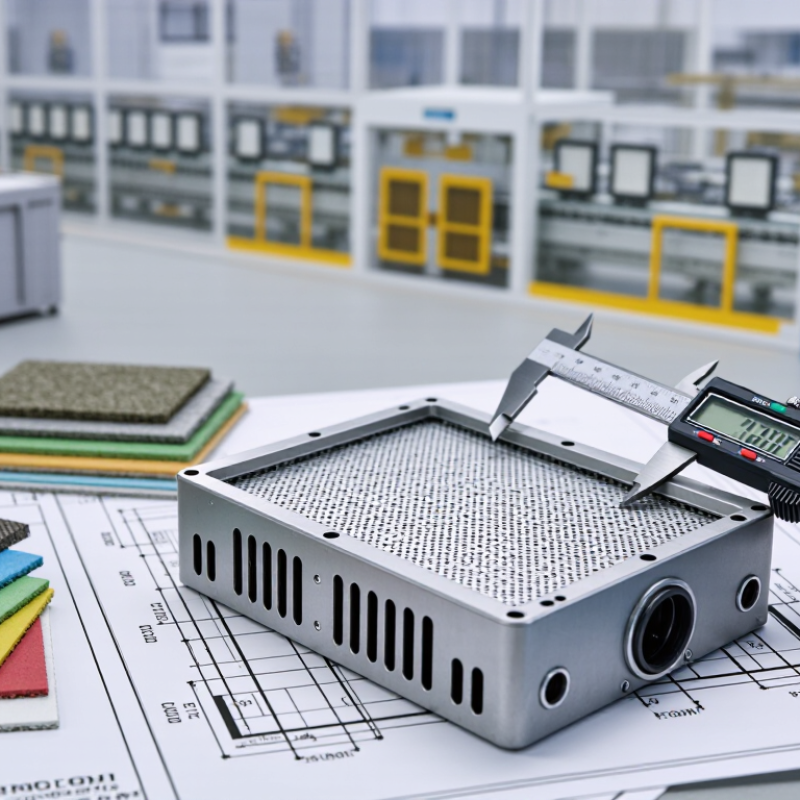
Record the temperature range, airflow, particle type, humidity, and available installation space. Ask suppliers to confirm these details against the filter’s rated limits. A filter that fits the housing may still restrict airflow or fail under repeated heat cycles. Request pressure-drop data at your expected flow rate, plus material specifications and dimensional drawings.
Check how the supplier controls quality. Ask for inspection records, batch traceability, and clear procedures for handling defects. For international orders, confirm production lead times, minimum quantities, export packaging, and replacement-part availability. Request a sample when practical, then test it under conditions close to your actual process. Paperwork can look polished. Performance still needs checking. Do not treat a single test result as proof of long-term durability; service life depends on dust load, maintenance, and operating cycles.
Tips: Send the supplier a simple specification sheet with target dimensions, temperature, airflow, and acceptable pressure drop. Compare quotations on the same requirements, not price alone. Clarify who pays for shipping damage and how claims are documented. One detail is easy to miss: metric and imperial dimensions may be rounded differently, so verify the final drawing before production.